Cat Puzzle Feeder Checklist: A Simple Routine for Smarter, Calmer Mealtimes
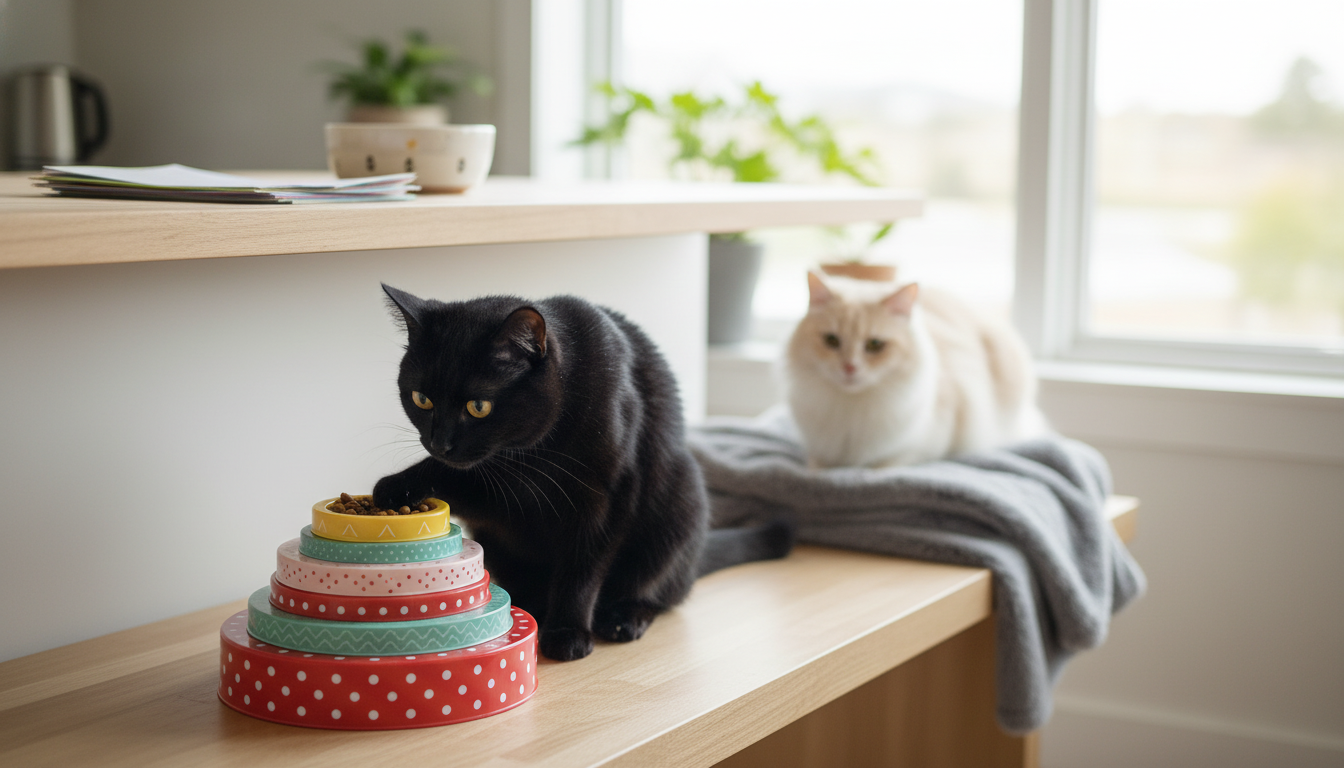
Puzzle feeders can turn everyday meals into enrichment that supports your cat’s natural “hunt, catch, eat” rhythm. The difference between a puzzle feeder that gets ignored (or launched across the kitchen) and one that becomes a smooth daily habit usually comes down to small details: starting easy, keeping sessions short, measuring portions, and tracking what works. Use the checklist-style routine below to introduce puzzle feeding without frustration, build confidence fast, and create calmer mealtimes that last.
What a Puzzle Feeder Routine Can Improve
- Slower eating for cats that gulp food or beg between meals
- More mental stimulation for indoor cats and high-energy cats
- A predictable enrichment habit that can reduce boredom-related behaviors
- Opportunities to add movement to the day without increasing food
- Better observation of appetite, motivation, and mealtime behavior changes
Many cats do best when puzzle feeding is treated like a routine, not a one-off toy. When the setup stays consistent, your cat learns what “success” feels like and is more likely to engage calmly the next time. For broader guidance on feline wellness and behavior, reputable references include the American Association of Feline Practitioners (AAFP), Cornell University College of Veterinary Medicine, and the ASPCA cat care library.
Before the First Use: Quick Setup Checklist
- Choose a quiet location with traction (mat or towel) so the feeder doesn’t slide
- Start when your cat is calm and moderately hungry (not overly hungry or stressed)
- Measure the meal portion first; avoid free-pouring into the puzzle
- Pick the easiest setting or largest openings for the first sessions
- Decide the food type: dry kibble often works best at first; treats can be used sparingly for training
- Set a time limit (10–15 minutes) and keep a backup plan ready if frustration appears
- Inspect for cracks, sharp edges, loose parts, or pieces that could detach
- Wash and fully dry the feeder before filling to reduce odor buildup and residue
A helpful rule: your cat should “win” quickly in the beginning. If the first attempt feels impossible, many cats decide the object is not worth their time—especially if they’re hungry or the environment feels busy.
A Gentle 7-Day Progression (No Guesswork)
- Days 1–2: Make it extremely easy; sprinkle a few pieces around the puzzle and leave some in a dish
- Days 3–4: Increase the amount served in the puzzle, keeping effort low and success frequent
- Days 5–6: Add mild challenge by reducing openings or increasing movement required
- Day 7: Evaluate: steady engagement, minimal frustration, and a consistent eating pace are signs it’s working
- If your cat walks away repeatedly, reduce difficulty and rebuild confidence before trying again
- Keep water available nearby, and avoid placing puzzles too close to litter boxes or noisy appliances
7-Day Puzzle Feeder Checklist (Quick Tracker)
| Day |
Difficulty |
Food Used |
Time Limit |
Cat Response |
Next Step |
| 1 |
Very easy |
Kibble/treat mix (small) |
10 min |
Sniffs, pawing begins |
Repeat same difficulty |
| 2 |
Very easy |
Kibble |
10 min |
Eats some from puzzle |
Increase portion in puzzle |
| 3 |
Easy |
Kibble |
10–12 min |
Completes most of meal |
Reduce dish portion |
| 4 |
Easy |
Kibble |
12 min |
Smooth success |
Slightly increase challenge |
| 5 |
Medium |
Kibble |
12–15 min |
Works steadily |
Maintain medium for consistency |
| 6 |
Medium |
Kibble |
12–15 min |
Finishes meal |
Consider rotation with another puzzle |
| 7 |
Medium (or easy) |
Kibble |
15 min |
Reliable routine |
Set weekly schedule and rotate |
Choosing the Right Difficulty for Different Cats
- Kittens and seniors: Favor simple designs and shorter sessions; prioritize easy wins.
- Cats new to enrichment: Start with puzzles that release food with minimal paw skill (more “easy access,” less precision).
- Highly food-motivated cats: Use measured portions and avoid jumping difficulty too quickly; fast frustration can look like “rage flipping.”
- Anxious or easily frustrated cats: Use “success scaffolding” (easy puzzle + a few pieces outside) so your cat gets rewarded early.
- Multi-cat households: Separate feeding stations to reduce competition and guarding; give each cat enough space to work.
- Weight management goals: Keep total calories constant and use puzzles to slow and spread meals, not to add extra snacks.
If your cat is motivated but messy, choose a setup change before assuming “they hate puzzles.” A towel under the feeder, slightly larger kibble, or a simpler release mechanism often turns chaos into calm.
Common Problems and What to Change First
Safety, Cleaning, and When to Pause Puzzle Feeding
Printable Checklist: Turn Trial-and-Error Into a Repeatable Habit
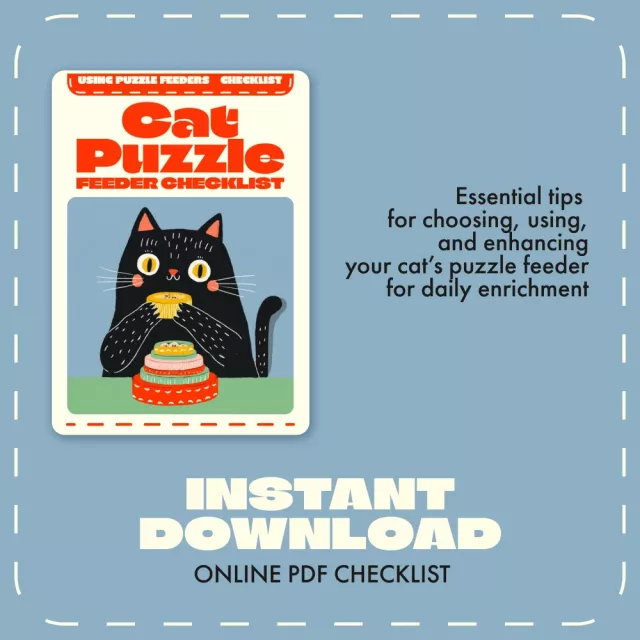
Digital Download: Cat Puzzle Feeder Checklist
Cat Puzzle Feeder Checklist (digital download)
FAQ
How long should a cat spend on a puzzle feeder per meal?
Start with about 10–15 minutes and end the session while your cat is still successful and engaged. If frustration shows up (walking away repeatedly, vocalizing, or rough handling), lower difficulty and shorten the time window.
Can puzzle feeders help with weight management?
They can help by slowing eating and encouraging light activity, but total calories still need to be measured. For many cats, splitting the same daily portion into multiple puzzle sessions works better than filling one large puzzle once.
What if my cat refuses to use the puzzle feeder?
Reduce difficulty, place a few easy-access pieces right outside or on top of the puzzle, and consider using a small amount of higher-value food briefly to build interest. Demonstrating how food moves (a gentle nudge) and transitioning gradually from a bowl often helps.
Recommended for you










Leave a comment