
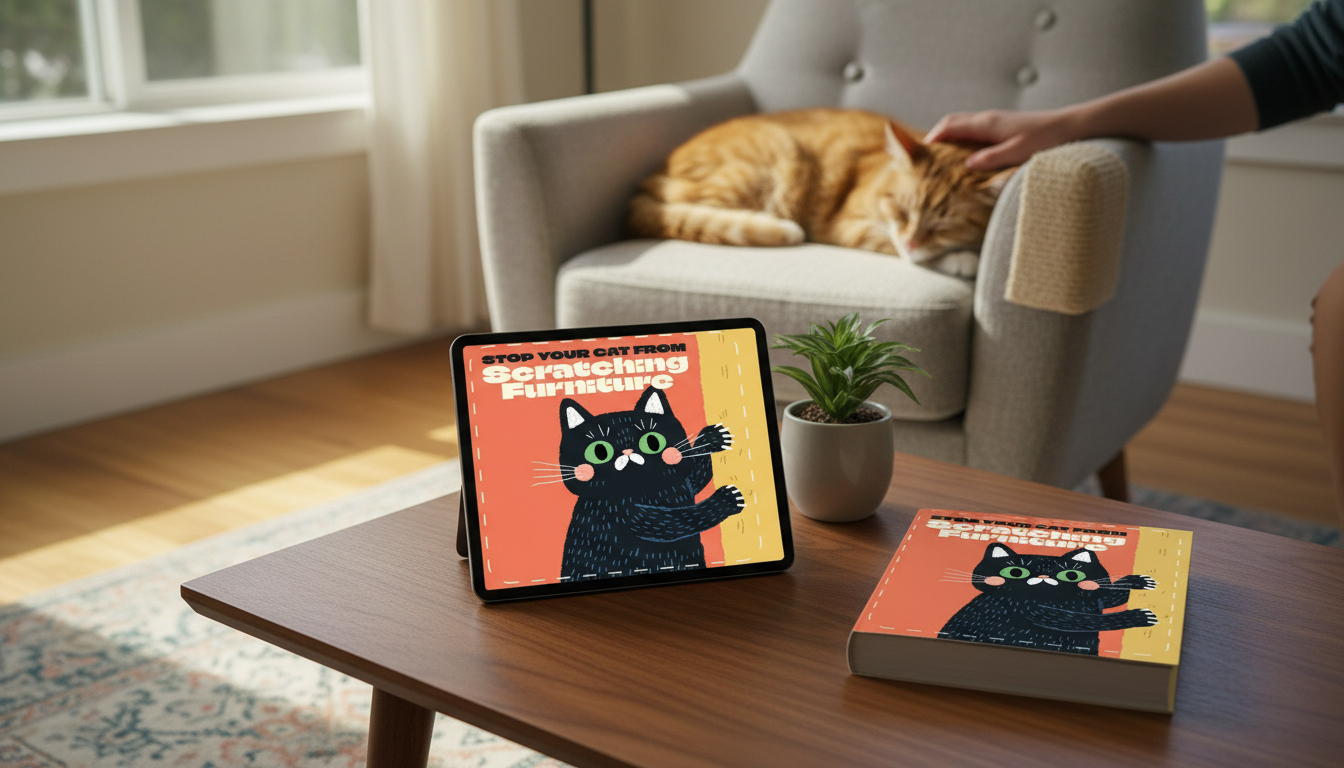
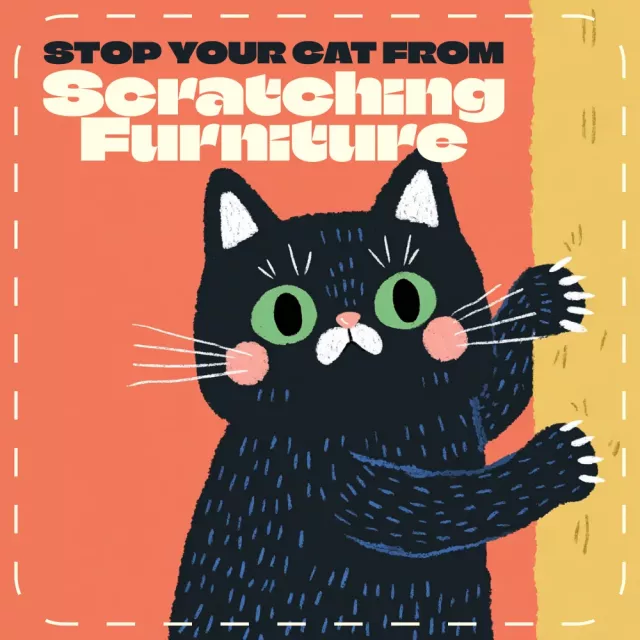
Scratching is a normal feline need for claw care, stretching, and communication—but it doesn’t have to happen on the sofa. With the right setup, gentle redirection, and consistent rewards, most cats can learn to use appropriate scratch spots while leaving furniture alone. For more guidance, see Stop Cat From Scratching Furniture With a Scratching Post.
Scratching is built into cat life. It helps remove the outer sheath of the claws, supports a full-body stretch (shoulders, spine, hips), and often works as a quick stress-release valve. Cats also scratch to leave both visible marks and scent signals from glands in their paws—essentially a “I was here” message in a shared space. For further reading, see How to Stop Your Cats From Scratching Furniture – Jackson Galaxy.
Because scratching is self-rewarding, punishment usually fails. Yelling, spray bottles, or physical corrections can increase anxiety and make scratching happen when you’re not around—or push your cat into other stress behaviors. The practical goal isn’t to eliminate scratching; it’s to move it to surfaces you actually want your cat to use. For more on why scratching is a normal behavior, see guidance from the ASPCA.
Before buying more posts or trying new deterrents, observe like a detective for a few days. Note the exact location (couch arm, doorframe edge, rug center), the timing (after naps, when you get home, during zoomies), and the “feel” of the surface (vertical fabric, horizontal carpet, or a corner with grip).
Patterns often reveal a preference (vertical vs. horizontal), a placement issue (scratching to “claim” a high-traffic area), or an emotional trigger (boredom, tension, or schedule changes). If the behavior changes suddenly, it can also point to discomfort or stress—Cornell’s overview of feline behavior concerns is a helpful reference: Cornell Feline Health Center.
| What you observe | Likely preference or need | Natural next step |
|---|---|---|
| Scratches on couch arms or chair sides | Vertical scratching + high-traffic marking | Place a tall, sturdy post right next to that spot |
| Scratches on rugs or carpet | Horizontal scratching + texture preference | Add a large cardboard scratcher or sisal mat nearby |
| Scratching near doors/windows | Territory marking or arousal from outdoor activity | Add a scratch post by the window; increase play and enrichment |
| Scratching increases at night | Boredom/energy imbalance | Add an evening play session and a food puzzle before bedtime |
The fastest way to protect furniture is to make “approved scratching” feel better than the couch. Start with stability: if a post wobbles even slightly, many cats won’t commit their full body weight to it. Choose a wide base, brace it against a wall, or go for heavier designs that don’t tip.
Next, match height to your cat’s natural stretch. Many cats prefer a vertical surface tall enough for a full reach—paws up, shoulders extended. At the same time, some cats are committed horizontal scratchers, especially if they’ve imprinted on carpet or area rugs. A simple setup that covers most households is: one sturdy vertical post in the main room and one large horizontal scratcher near a favorite lounging area.
Placement usually matters more than quantity. Put the scratcher directly beside the problem spot first (yes, right next to the couch arm). Once your cat is choosing it consistently, you can inch it a foot at a time toward a more convenient location without losing the habit.
Deterrents work best when they change the “feel” of the furniture while your cat builds a stronger habit with appropriate scratchers. Aim for calm, physical solutions rather than anything that startles.
If you want a step-by-step training sequence with checklists you can print, see: How to Stop Your Cat from Scratching Furniture Naturally (Printable eBook).
For households that thrive on routines and time-saving systems, a general planning tool can also help keep training consistent day to day: Healthy Meal Plan & Recipe Collection (Digital Download).
Many cats improve within 2–6 weeks when scratchers are placed at the exact hotspots and correct scratching is rewarded consistently. Use nail trims and furniture guards during the learning phase to prevent damage while the new habit strengthens.
Caution is best: many essential oils can be harmful to cats, and strong scents can add stress. Safer options include double-sided tape, clear scratch guards, furniture covers, and making scratchers more attractive with catnip or silver vine.
Try different orientations and materials (tall sisal post vs. wide cardboard scratcher), improve stability, and move the scratcher directly to the furniture hotspot. Reward any interaction—sniffing, touching, or one paw scratch—to build momentum toward regular use.










Leave a comment