Pet Travel Essentials Checklist for Safe Trips (Printable Planner for Dogs & Cats)
A smooth trip with a dog or cat comes down to preparation: the right documents, the right gear, and a routine that reduces stress. Use this checklist-style guide to plan road trips and vacations, pack efficiently, and keep pets safe and comfortable from departure to arrival.
Before the Trip: Quick Safety Check
- Confirm your pet is healthy enough to travel; schedule a vet visit if there are any new symptoms, recent surgeries, or chronic-condition changes.
- Update ID: collar tag with a current phone number and a registered microchip with up-to-date contact info.
- Practice the travel setup in advance: short car rides for dogs; carrier time and calm treats for cats.
- Plan realistic travel days: build in time for breaks, feeding schedules, and decompression at the destination.
- Identify the nearest emergency veterinary clinic along the route and near your lodging.
For destination requirements and health guidance, check authoritative resources like CDC — Traveling with Pets and AVMA — Traveling with Your Pet.
Documents and Health Items to Pack
- Rabies certificate and vaccination records (required by some boarding facilities, parks, or state rules).
- Health certificate if required for air travel or certain destinations; confirm timing requirements before departure.
- Prescription medications in original containers; pack a few extra days in case of delays.
- Flea/tick and heartworm prevention based on destination risks; ask your veterinarian for guidance.
- A recent photo of your pet (full body and close-up) for identification if separated.
If you’re crossing borders or traveling to regulated destinations, verify current rules through USDA APHIS — Pet Travel well before departure.
Packing Checklist for Dogs and Cats (Essentials First)
- Food and feeding gear: enough for the full trip plus extra; bring the regular diet to avoid stomach upset.
- Water strategy: bottled or familiar water if your pet is sensitive; collapsible bowls for stops.
- Containment and restraint: secure carrier for cats; crash-tested harness or secured crate for dogs when possible.
- Waste and cleanup: poop bags, litter/litter box options, paper towels, enzyme cleaner, disposable gloves.
- Comfort items: familiar blanket/bed, a favorite toy, and calming aids recommended by your vet if needed.
- Weather and terrain: paw protection, coat/rain layer, cooling towel, and sun shade depending on season.
Essential packing list by category
| Category |
Dogs |
Cats |
Notes |
| Safety & restraint |
Harness + seat belt tether or secured crate |
Hard-sided or soft carrier; harness/leash for transfers |
Never allow free-roaming in the vehicle |
| Food & water |
Measured meals; travel bowls; treats |
Measured meals; travel bowls; treats |
Pack 2–3 extra days of food for delays |
| Medical |
Meds, flea/tick prevention, vet contact info |
Meds, flea/tick prevention, vet contact info |
Keep meds in original packaging when possible |
| Hygiene |
Poop bags, wipes, towels |
Litter, small box or liner system, wipes |
Bring enzyme cleaner for accidents |
| Comfort |
Bed/blanket, chews, toy |
Blanket, toy, carrier cover |
Familiar scents help reduce stress |
| ID & paperwork |
Tags, microchip info, vaccination records |
Tags (if used), microchip info, vaccination records |
Save digital copies on your phone |
Road Trip Routine: Stops, Feeding, and Vehicle Safety
- Break schedule: stop every 2–3 hours for water and a short walk/sniff session (dogs) or quiet check-in (cats).
- Feeding timing: avoid large meals right before departure; consider smaller portions and keep routine consistent.
- Temperature control: never leave pets in a parked car; bring window shades and keep airflow steady.
- Secure loading/unloading: always leash dogs before opening doors; keep cats in a closed carrier during transfers.
- Motion sickness: ask a veterinarian about options if your pet drools, vomits, or shows anxiety during rides.
Small details make a big difference: pack a dedicated “car kit” (paper towels, enzyme cleaner, spare leash, and a trash bag) where it’s reachable without unloading the trunk.
Air Travel and Public Transit: Carrier and Policy Basics
Lodging Setup: A Safe “Home Base” in Minutes
Printable Planner: What to Track for Each Trip
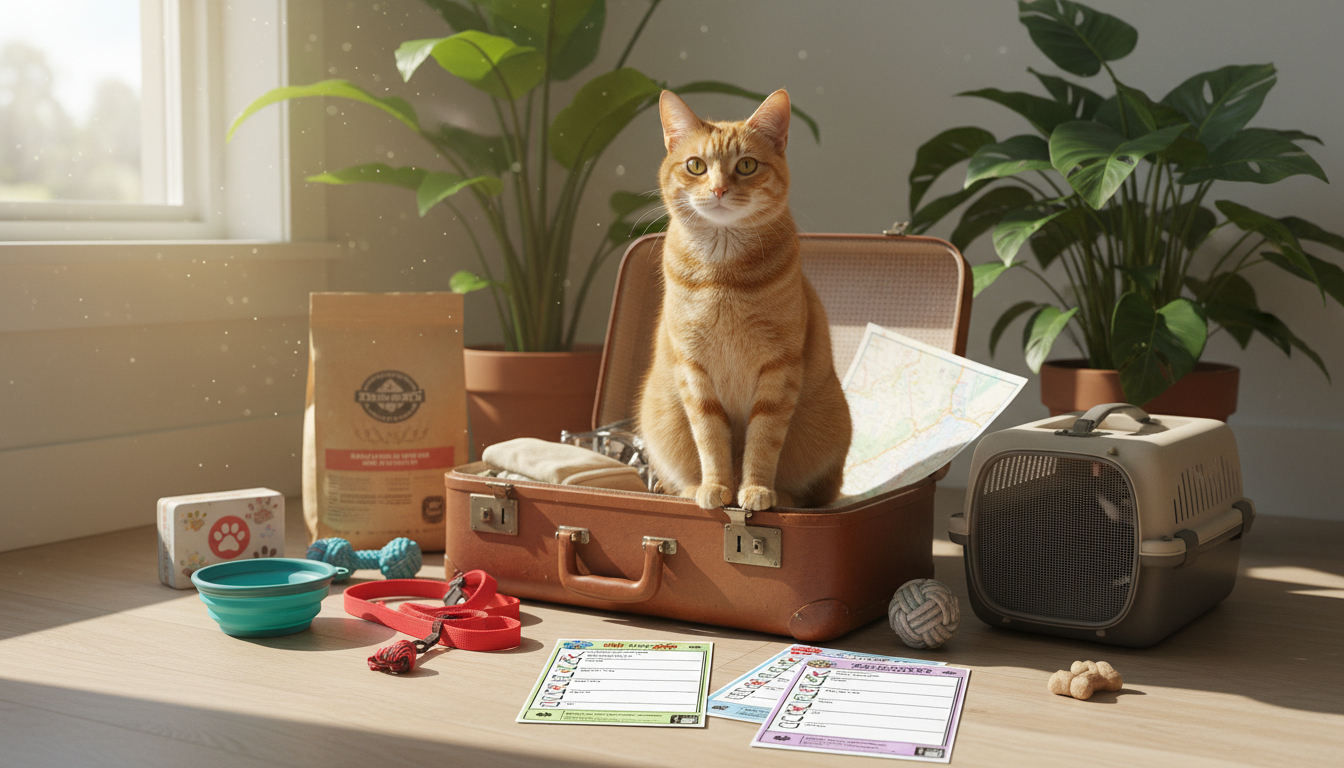
If you want a simple, pack-and-go reference, use our Printable Pet Travel Essentials Checklist and Planner to keep trip details and packing status in one place.
Extra Trip Helpers (Optional, but Handy)
FAQ
What are the most important items to bring when traveling with a pet?
Prioritize safe restraint (carrier, crate, or harness tether), your pet’s regular food and water supplies, medications and records, updated ID/microchip info, cleanup items, and one familiar comfort item. Then add destination-specific gear for weather and planned activities.
How often should dogs stop on a road trip?
A common target is every 2–3 hours for water and a short walk. Adjust for age, health, heat, and your dog’s comfort, and plan extra stops for puppies and seniors.
How can a cat travel safely in the car?
Use a secure carrier placed on a stable surface and buckled in when possible, and keep the carrier closed during transfers. Bring a familiar blanket to reduce stress and avoid opening the carrier in unsafe or unfamiliar areas.
Recommended for you












Leave a comment