

A smartwatch can be a life-improver or an expensive notification screen. The difference usually comes down to a handful of features that deliver daily value: clear health insights, reliable connectivity, durable hardware, and a battery that fits real routines. Below is a practical breakdown of what’s genuinely worth paying for, what’s “nice to have,” and how to match features to the way a watch will actually be used.
Before comparing specs, get specific about outcomes. Separate true “must-haves” (health, safety, communications, navigation) from “cool extras” (novel watch faces, gimmicky mini-games). A watch that nails a few daily jobs is usually a better buy than one that does a little bit of everything—unreliably.
| Use case | Features worth paying for | Features to treat as optional |
|---|---|---|
| Fitness and training | Accurate heart-rate sensor, GPS quality, training load/recovery metrics, water resistance | On-watch music storage, animated coaching, exotic sport modes |
| Health and wellness | Sleep tracking quality, irregular rhythm notifications where available, SpO2 (context-aware), reliable app insights | Single snapshot metrics without trends, stress scores with no guidance |
| Productivity | Notification controls, quick replies/voice, calendar integration, focus modes | Dozens of app tiles, novelty widgets |
| Outdoor/adventure | Bright display, strong GPS/GLONASS/Galileo support, maps/trackback, rugged build | Overly complex “survival” apps with limited offline value |
| Calling/phone-lite | Bluetooth calling quality, mic/speaker clarity, LTE option if needed, contact management | Standalone app ecosystem without reliable connectivity |
Health tracking is where paying more can translate into better day-to-day decisions—especially when the watch presents trends clearly and stays consistent overnight and during sweaty workouts.
When a product claims medical-grade insights, it’s worth understanding the broader landscape of wearables and oversight; the U.S. Food & Drug Administration’s wearable devices page explains how wearables fit into digital health.
Many smartwatches fail not because they lack features, but because they’re annoying to interact with. Paying for usability often pays back every single day.
If Bluetooth calling is a priority, a watch built for daily knocks and quick interactions can be a better fit than a fashion-first model. One option designed around visibility and calling convenience is the Rugged AMOLED Smartwatch with 3D Curved Display & Bluetooth Calling.
Battery life is less about a single published number and more about whether the watch survives your day. Always-on display, frequent GPS use, and calls can turn “two-day” claims into a daily charging routine.
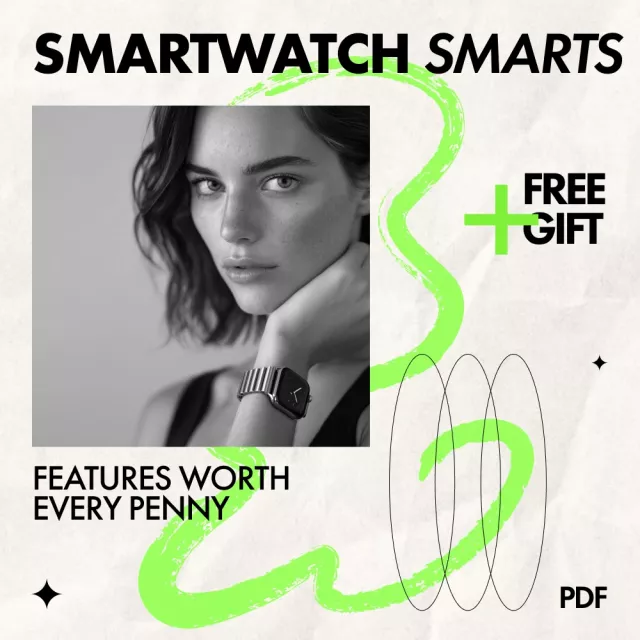
For a feature-by-feature breakdown that helps match real needs to the right device tier, the Smartwatch Smarts: Features Worth Every Penny (Digital eBook Download) expands on health metrics, connectivity tradeoffs, durability, and which upgrades tend to deliver lasting satisfaction.
Heart-rate accuracy, dependable sleep tracking with trends, solid battery/charging, a readable display, and strong notification controls usually deliver the most day-to-day payoff. Add GPS quality and safety features when they match your routine (runs, hikes, commuting).
LTE is worth it when the phone is often left behind and calling/texting or safety features need to work independently. If the phone is usually nearby, Bluetooth-only models typically offer better value and longer battery life.
No—sensor quality, algorithms, and long-term trend reporting matter more than a long sensor list. Prioritize accuracy, consistency (especially overnight and during intervals), and clear, exportable reporting.









Leave a comment