Positive Parenting Tips Guide: Gentle Parenting and Empathic Communication for Everyday Moments
Gentle parenting centers on connection, clear boundaries, and teaching skills rather than relying on fear or punishment. This guide-style approach helps moms and dads respond to big feelings, reduce power struggles, and build cooperation through empathic communication that still holds limits. Use the sections below to practice practical scripts, routines, and repair strategies that fit real family life.
What gentle parenting looks like in daily life
Gentle parenting isn’t “never upset” parenting. It’s a steady commitment to lead with connection, keep limits predictable, and teach skills that kids can reuse.
- Connection first: notice the need or emotion before addressing the behavior (“You’re disappointed” comes before “No”).
- Boundaries stay firm: a kind tone plus a clear limit keeps you authoritative without becoming punitive.
- Skill-building focus: teach what to do next time—naming feelings, problem-solving, calming tools.
- Consistency through routines: predictable rhythms reduce conflict and decision fatigue for everyone.
- Repair is part of the method: reconnect after hard moments to rebuild safety and trust.
For more evidence-based parenting basics and age-by-age expectations, see the American Academy of Pediatrics’ Positive Parenting Tips and the CDC parenting resources.
Empathic communication basics (so kids can hear the limit)
Empathy isn’t giving in. It’s showing you understand what’s happening internally—so your child’s brain can settle enough to process the limit.
- Name what’s happening: reflect feelings and the situation in simple words (especially for toddlers).
- Validate without agreeing: acknowledge emotion while keeping the boundary.
- Use fewer words: short phrases land better during dysregulation.
- Offer a next step: give one acceptable choice or a clear alternative to the unsafe/unkind behavior.
- Mind the tone and posture: calm voice, soft face, and steady body language reduce escalation.
Quick empathy-to-boundary scripts
| Moment |
Empathy phrase |
Boundary/next step |
| Hitting or kicking |
“You’re really mad.” |
“I won’t let you hit. Hit this pillow or stomp here.” |
| Refusing to leave the park |
“Leaving is hard when you’re having fun.” |
“It’s time to go. Do you want to walk or be carried?” |
| Sibling conflict over a toy |
“You both want the same thing.” |
“I’m going to help. Timer for turns or choose another toy.” |
| Screaming for a snack |
“You’re hungry and frustrated.” |
“Snack is after hands are washed. I’ll help you start.” |
| Bedtime protests |
“You want more time with me.” |
“One more story, then lights out. Choose the book.” |
Positive discipline that teaches (without threats or shame)
Discipline means “to teach.” When the goal is skill-building, kids learn faster—and the parent-child relationship stays intact.
- Separate the child from the behavior: protect dignity (“Not okay to throw,” not “You’re bad”).
- Use natural and logical consequences: keep them immediate, related, and respectful (clean-up together after a mess).
- Prioritize safety and coaching: block harm first; teach replacement skills when calm returns.
- Create “yes spaces” and clear expectations: set the environment up so you say “yes” more often.
- Follow through neutrally: calm consistency works better than intensity.
If you want a deeper overview of constructive discipline approaches, the American Psychological Association’s discipline guidance is a solid starting point.
Cooperation tools for common stress points
Cooperation is more likely when kids know what’s coming, feel some agency, and get help meeting expectations.
- Transitions: give a warning, a ritual, and a job (“Two-minute timer, then shoes. You’re the light switch helper.”).
- Morning routines: reduce decisions by batching steps and using a simple checklist (dress, bathroom, breakfast, backpack).
- Public meltdowns: move to safety, lower demands, and use a short grounding phrase (“I’m here. Breathe with me.”).
- Homework or chores: start with connection, break tasks into small wins, and use specific praise for effort.
- Screen time: set expectations before devices turn on; use predictable end cues (timer + transition activity).
One helpful mindset shift: treat recurring “hot spots” like skills to practice, not character flaws to correct. That keeps you focused on coaching rather than lecturing.
When yelling happens: repair and reset
Even calm parents lose it sometimes. Repair teaches kids accountability, emotional responsibility, and reconnection after conflict.
- Own the impact: brief apology without over-explaining (“I yelled. That was not okay.”).
- Name the plan: share what will change next time (“I’m going to take a breath and use a calm voice.”).
- Invite connection: offer a small reconnecting action (hug, hand squeeze, short chat, shared activity).
- Practice calming as a family: model skills—breathing, water break, movement, sensory tools.
- Track patterns: note time, trigger, and unmet adult need (sleep, hunger, overload) to prevent repeats.
A simple weekly practice plan
Gentle parenting works best when you practice during calm moments, then use the same language when things get messy.
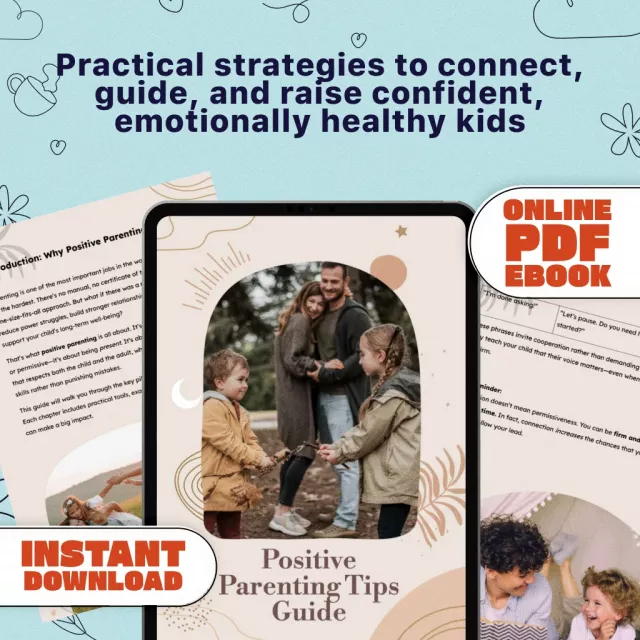
Digital guide option for moms and dads who want ready-to-use language
FAQ
Is gentle parenting the same as permissive parenting?
No. Gentle parenting includes firm, consistent boundaries and calm follow-through, while permissive parenting tends to avoid limits. An example is: “You’re upset, and I won’t let you hit—hands stay on your body.”
What should a parent say during a tantrum?
Use short, steady language: name the feeling, state the safety boundary, and pause. For example: “You’re mad. I’m here. I won’t let you hurt yourself or me,” then wait for calm before teaching or offering a limited choice.
How long does it take for positive discipline to work?
Most families see gradual change over weeks as kids build skills and trust the boundary will stay the same. Progress is uneven, so tracking triggers, practicing during calm times, and repairing after slip-ups helps the new pattern stick.
Recommended for you












Leave a comment