
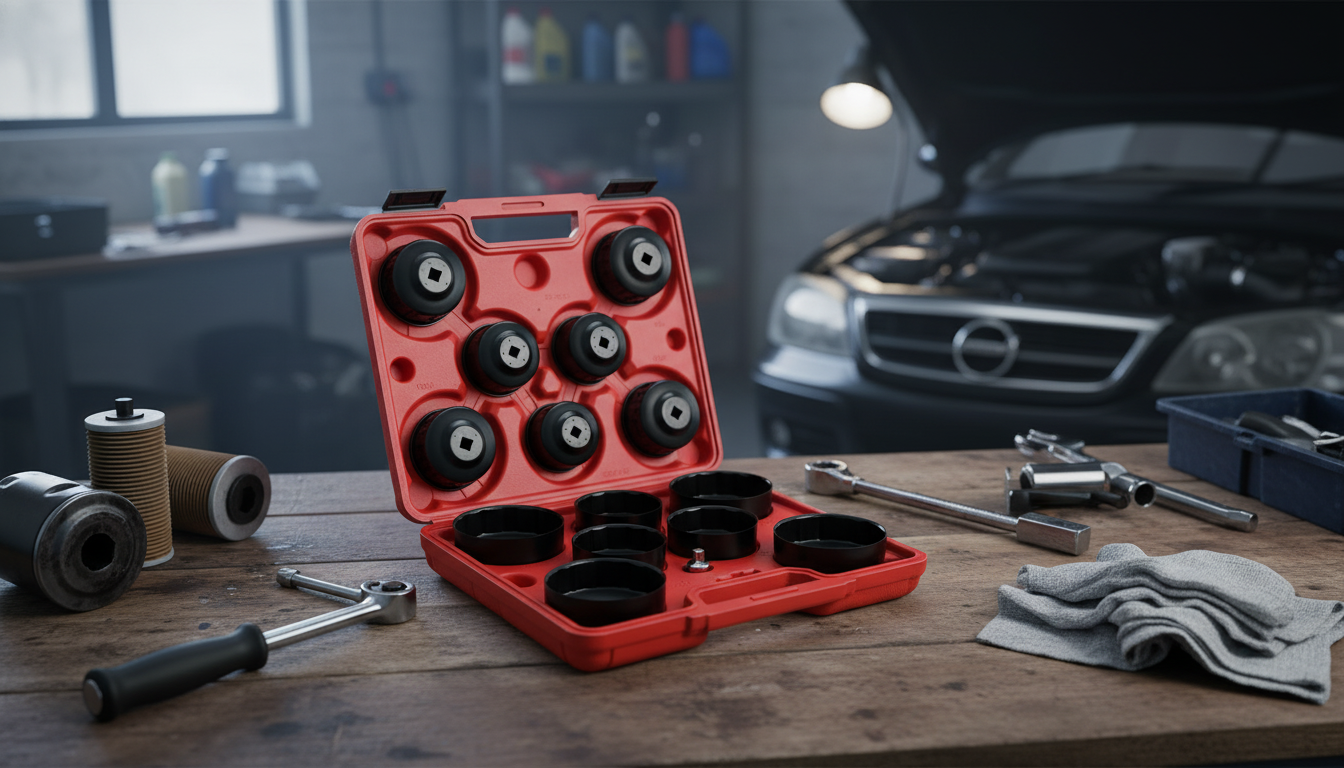
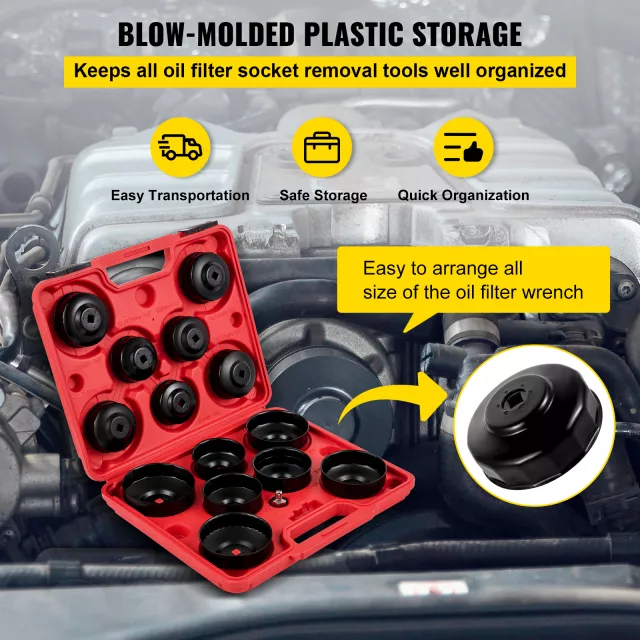
A low-profile oil filter cap set helps remove stubborn cartridge-style and canister oil filters in tight engine bays without rounding the housing. This 14-piece kit is designed to provide a secure, cup-style grip and cleaner engagement than strap or plier-style tools—especially when access is limited and the filter is torqued down.
Cap-style oil filter sockets are all about consistent engagement. Instead of squeezing a slick, oily surface (like pliers) or relying on friction (like many strap wrenches), a properly sized cap tool surrounds the filter cap/housing and turns it with more uniform contact.
A multi-piece kit is a practical answer to the reality of modern vehicles: oil filter housings and caps vary by manufacturer, engine family, and even model year. A 14-piece assortment aims to cover common shapes and sizes so you can grab the closest match instead of improvising with the wrong tool.
| Tool | Why it helps | Practical tip |
|---|---|---|
| Ratchet | Provides controlled turning force | Use steady pressure to avoid cracking plastic housings |
| Extension | Improves access in recessed filter locations | Add length until the ratchet clears nearby components |
| Torque wrench | Helps tighten to spec when reinstalling | Follow the vehicle service manual for torque values |
| Breaker bar | Adds leverage for stuck caps | Use carefully; too much force can damage the housing |
| Shop rags/degreaser | Improves grip and keeps work area clean | Wipe the cap and tool before turning |
Clearance is often the difference between a clean removal and a frustrating, half-engaged attempt that rounds the cap. A low-profile socket helps keep your drive tool aligned with the housing, even when you’re working at the edge of a fan shroud or near a chassis brace.
That alignment matters even more with plastic housings. When the tool sits crooked, force concentrates on a smaller area, increasing the chance of damaged “flats” or cracked plastic.
The best cap tool is the one that seats fully and turns the housing without wobble. Before you start, take a minute to confirm the type of filter and the size/shape of the housing cap.
When in doubt, consult the owner’s manual or service information for your vehicle’s exact oil filter housing details and tightening procedure. The NHTSA’s owner resources can help you locate official manuals and guidance: https://www.nhtsa.gov/vehicle-owners.
A careful workflow protects both your hands and the housing. It also reduces the “one last heave” habit that leads to broken caps and expensive parts runs.
For technical background on automotive service standards and best practices, SAE’s technical resources are a helpful reference point: https://www.sae.org/.
Cap sockets are most commonly used on cartridge filter housings and on some spin-on filters that match a specific cup size. Fit depends on the exact filter or housing dimensions, so the correct size and shape are required.
Yes—when the cap is correctly sized and engaged squarely, force is distributed more evenly and slipping is reduced. Cracking can still happen if the tool is the wrong size or if excessive force is used, so tightening to the specified torque matters.
Clean the housing, confirm the cap tool is fully seated, and use controlled leverage with a longer handle rather than impacts. If the housing features are rounded or the cap is damaged, replacement may be necessary before the next service.









Leave a comment