
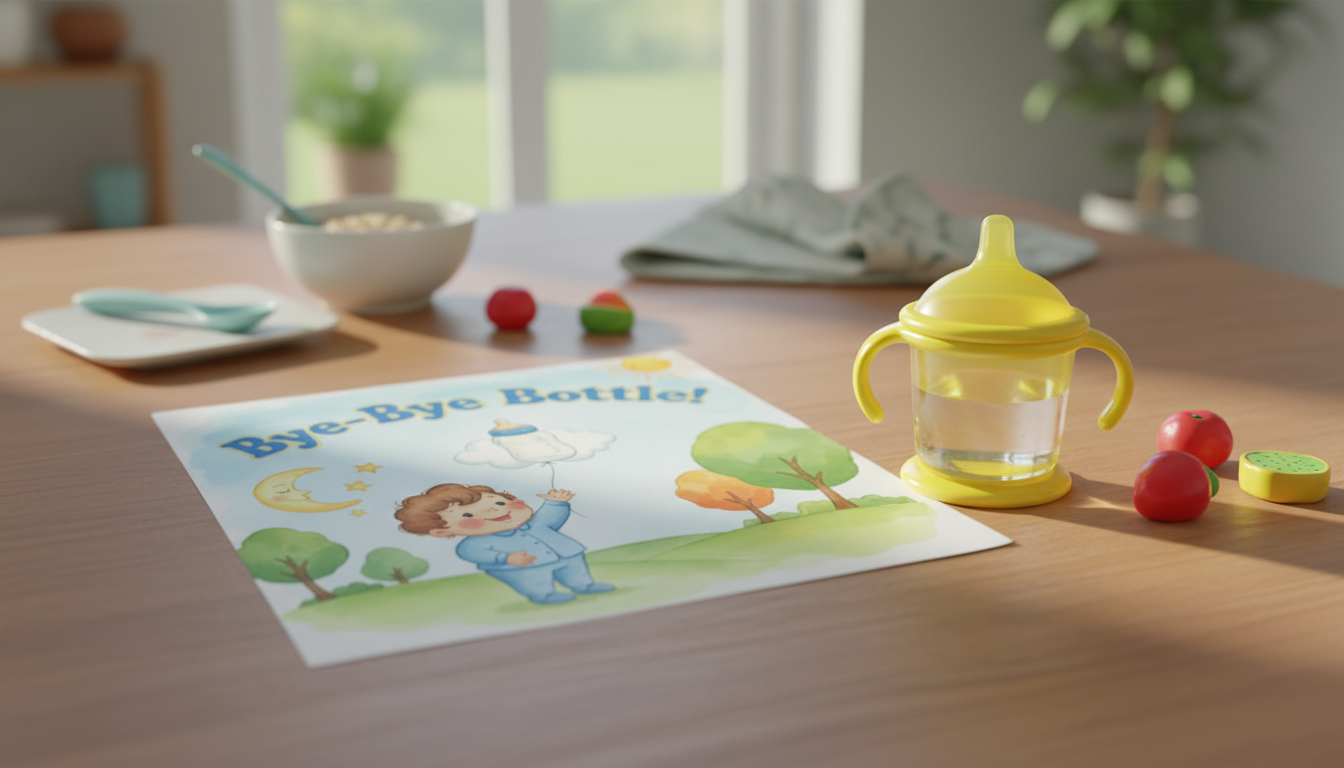
Bottle-weaning can feel surprisingly emotional and surprisingly disruptive to routines. A clear plan helps toddlers know what to expect, protects sleep as much as possible, and supports healthy feeding habits while the bottle fades out. The goal isn’t perfection—it’s consistency, simple replacements, and a timeline that moves forward without turning every day into a negotiation.
Most toddlers show a handful of “green lights” that make the transition easier. Readiness doesn’t require all signs at once, but the more you have, the smoother it tends to go.
For general guidance on timing and why moving to cups matters, the American Academy of Pediatrics is a helpful starting point.
Preparation is what keeps bottle-weaning from turning into a daily “maybe.” Before you remove anything, set your toddler up to win with a cup they’ll accept and routines your whole household can stick to.
| Prepare | What to do | Why it helps |
|---|---|---|
| Cup options | Offer 1–2 cup types (straw + open-cup practice) and stick with them | Consistency lowers refusal and confusion |
| Bottle visibility | Pack bottles away rather than leaving them on the counter | Out of sight reduces asking and bargaining |
| Drink schedule | Plan set times for milk and water, especially around meals/snacks | Predictability reduces comfort-seeking |
| Bedtime routine | Decide the new last step (brush teeth, book, cuddle) before removing the bedtime bottle | Protects sleep associations and dental routine |
| Caregiver alignment | Agree on the plan with all caregivers for 2–3 weeks | Prevents “one more bottle” backsliding |
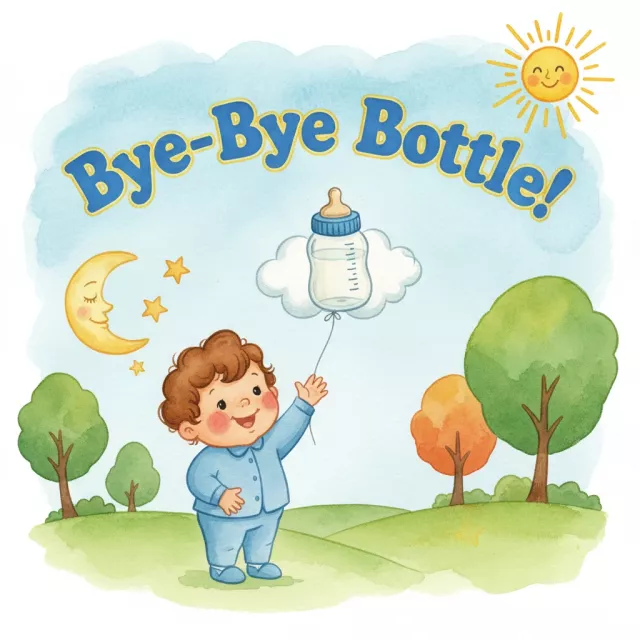
If you want a simple, printable-style structure to keep everyone aligned, the Bye-Bye Bottle! Toddler Bottle-Weaning Checklist (digital download) is an easy way to track which bottles are gone, what routines replaced them, and which comfort swaps are working.
A step-down approach keeps momentum without forcing you to fix everything at once. It also helps toddlers practice the new “rule” in low-stress situations before you challenge sleep-related bottles.
One practical tip: treat the plan like a short “season.” For two to three weeks, keep cup choices, language, and routines steady. You can expand options later—once the bottle is no longer part of the conversation.
What you offer matters, but when you offer it often matters more. A predictable drink routine helps toddlers stop “grazing” on milk and builds appetite for solids.
The CDC’s infant and toddler nutrition guidance includes helpful reminders on drinks, cups, and how routines support healthy eating patterns.
Dental routines often get overlooked during this transition. The American Dental Association explains why milk before sleep (especially without brushing) can contribute to tooth decay—one more reason to move “milk” earlier and keep brushing as the final step.
Two helpful tools to keep momentum (especially during sleep changes) are the Bye-Bye Bottle! Toddler Bottle-Weaning Checklist (digital download) and the Toddler Nap Transition Guide (printable checklist) for families who are adjusting naps around the same time.
Often yes, because sleep is usually the strongest bottle association. Remove daytime bottles first, then shift bedtime milk earlier in the routine and keep toothbrushing as the final step before sleep.
Offer milk at set times with meals/snacks, keep the same cup for at least a week, and avoid switching back to bottles. If intake drops significantly or you have growth concerns, check with a pediatrician.
Many families finish in 2–4 weeks with a step-down approach, though nap/bedtime transitions can take longer. Consistency tends to shorten the toughest phase.










Leave a comment