
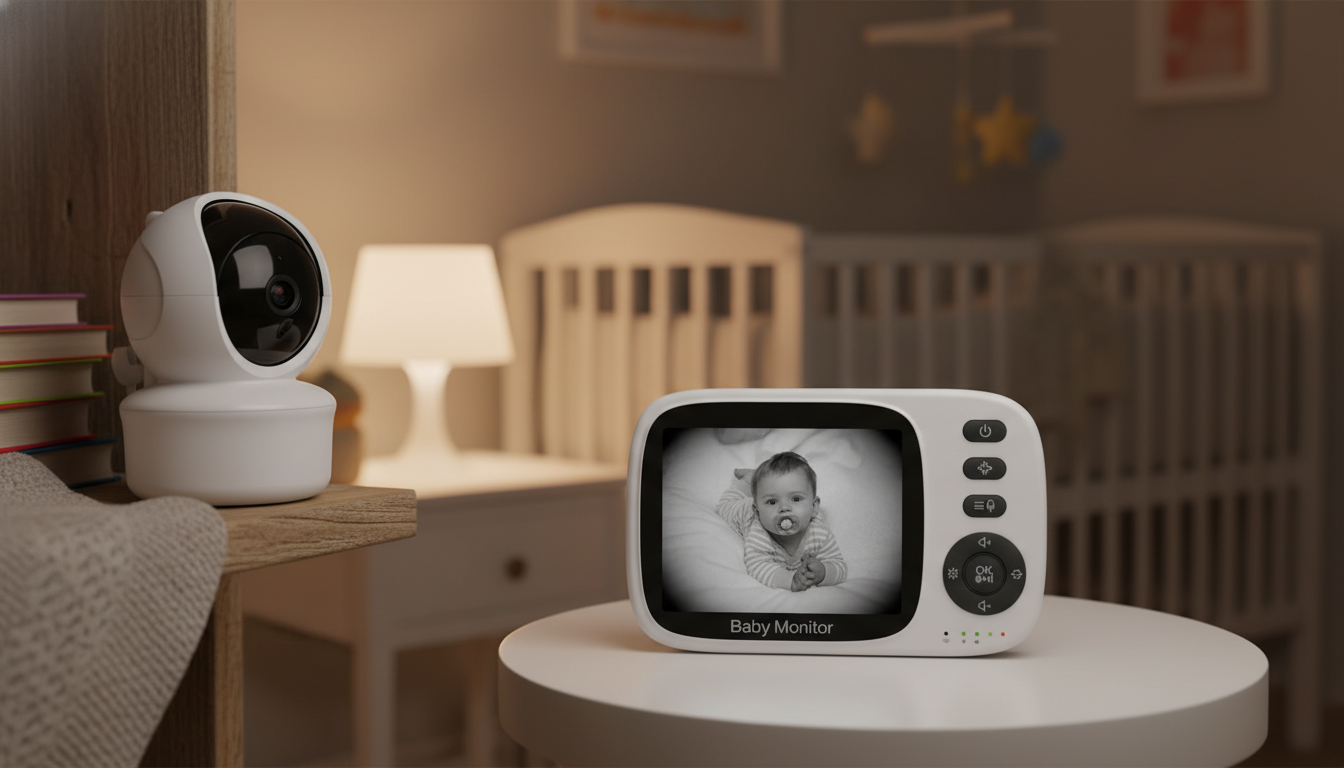
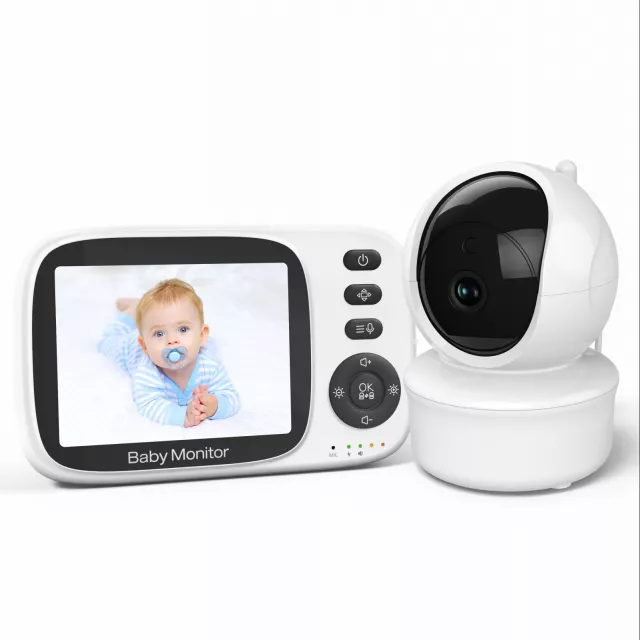
A reliable baby monitor helps caregivers stay responsive without hovering. A 3.2″ monitor that combines night vision, VOX (sound-activated) alerts, and two-way audio supports quick check-ins, calmer bedtimes, and fewer unnecessary screen glances—especially during naps and overnight sleep. Instead of keeping the screen on all evening or tiptoeing into the nursery, you can confirm baby is settled, hear when something changes, and offer reassurance from another room.
Daily life with a baby often calls for “just enough” awareness: not constant watching, but confident check-ins. A compact parent unit with core features can help with:
Infrared night vision is designed to provide a clear grayscale view in darkness without turning on a lamp or overhead light. That matters because light can fully wake a baby who was otherwise transitioning between sleep cycles. With a dark-room view, it’s easier to confirm baby is settled and then step away without disrupting the room’s sleep-friendly environment.
For broader safety guidance around the sleep environment, review the American Academy of Pediatrics (AAP) safe sleep recommendations and the CPSC crib safety tips.
VOX mode typically keeps the screen quiet (and often off) until sound crosses a set sensitivity threshold. Instead of feeling pulled into constant monitoring, you can let the parent unit stay calm and only “wake up” when something meaningful happens—like fussing that’s building or a sudden cry.
Two-way audio can be the difference between quick reassurance and a fully escalated wake-up. A calm, brief phrase—delivered early—sometimes settles light fussing before it turns into crying.
A monitor is only as useful as its setup. A few practical steps can improve reliability and peace of mind from day one:
| Feature | What it does | Why it helps |
|---|---|---|
| 3.2″ display | Shows a live video feed on a compact screen | Quick visual check-ins without extra apps |
| Night vision | Displays the nursery in darkness using infrared | Check sleep without turning on lights |
| VOX mode | Activates alerts/screen based on sound levels | Fewer unnecessary wake-ups for caregivers |
| Two-way audio | Lets caregivers speak through the camera unit | Soothe from another room |
| Portable parent unit | Handheld receiver for moving around the home | Monitoring while cooking, working, or resting |
VOX mode activates the screen and/or audio when sound rises above a chosen sensitivity level. Adjusting sensitivity helps prevent false triggers from fans or white noise while still alerting you quickly when your baby fusses or cries.
Night vision typically uses infrared (IR) LEDs, which are not visible like a night light. For best safety, follow the manufacturer’s instructions and place the camera securely away from the crib and out of reach.
Position the camera for a stable, wide view of the full crib or sleep area, and keep any cords completely out of reach. Test the angle in daylight and in darkness to confirm both the framing and night-vision clarity.










Leave a comment