
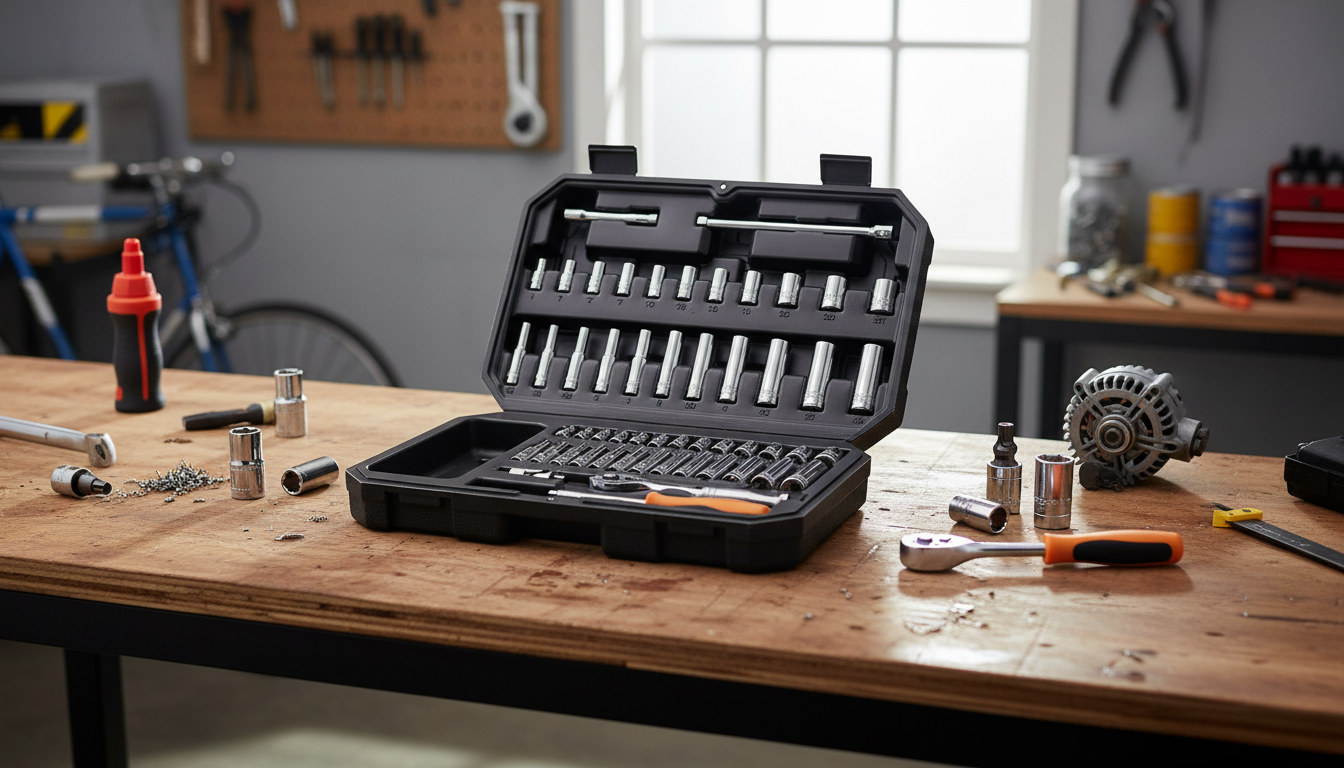
A compact socket set that covers both SAE and metric fasteners helps handle everyday fixes without hunting for the right size. This 54-piece kit pairs a ratchet with a range of sockets and comes organized in a storage case for quick grab-and-go use at home, in the garage, or on the road. If your projects bounce between older inch-based hardware and modern metric bolts, a dual-standard set keeps momentum going—especially when space is limited and you want one case that’s ready for most routine jobs.
Instead of juggling multiple open trays or hunting through a drawer, a single case with consistent layout makes it easier to stay focused on the task. That matters when the job is small—tightening a loose handle, swapping a battery terminal, adjusting a mower guard—but time-sensitive.
| Component | Primary use | Why it helps |
|---|---|---|
| SAE sockets | Turning inch-sized nuts/bolts | Fits older or inch-standard hardware |
| Metric sockets | Turning mm-sized nuts/bolts | Fits most modern equipment and many vehicles |
| Ratchet | Fast tightening/loosening | Speeds work without removing the tool each turn |
| Storage case | Organization and transport | Keeps pieces together and easy to identify |
In the U.S., it’s common to encounter both systems in the same weekend. Metric measurements are part of the International System of Units (SI), while SAE sizing references inch-based conventions often found in older hardware and certain specialty components. For a quick refresher on measurement standards, see the NIST overview of SI units and background from SAE International.
A practical habit is to “test wiggle” the socket before you commit: if it rocks on the fastener, it’s probably not the correct size. For stuck hardware, a brief soak with penetrating oil and a few minutes of patience can save both the bolt head and the tool.
Small losses add up fast with socket sets. Treat the case like a checklist: when each slot is filled, you know you’re ready for the next job. If you frequently work in humid areas or store tools in a vehicle, a light wipe with a rust-inhibiting oil can help keep surfaces protected.
For most day-to-day fixes—tightening loose hardware, swapping parts, assembling equipment, or handling minor vehicle tasks—a compact dual-standard kit offers a strong “grab it and go” advantage. When something squeaks, rattles, or loosens, having the basics ready in one case often means the difference between a quick fix now and a bigger repair later.
SAE socket sizes are measured in inches (often shown as fractions), while metric socket sizes are measured in millimeters. Hardware can use either system depending on the manufacturer, region, and the era the product was made.
It’s best not to substitute a “close” size because it can slip and round off the corners of the fastener. Use the exact-fitting socket whenever possible, and only try the other system if the correct size isn’t available.
Wipe sockets clean and dry, return them to their assigned slots in the case, and store the case closed and latched in a dry area. In humid climates, a very light oil film can add extra protection.










Leave a comment