
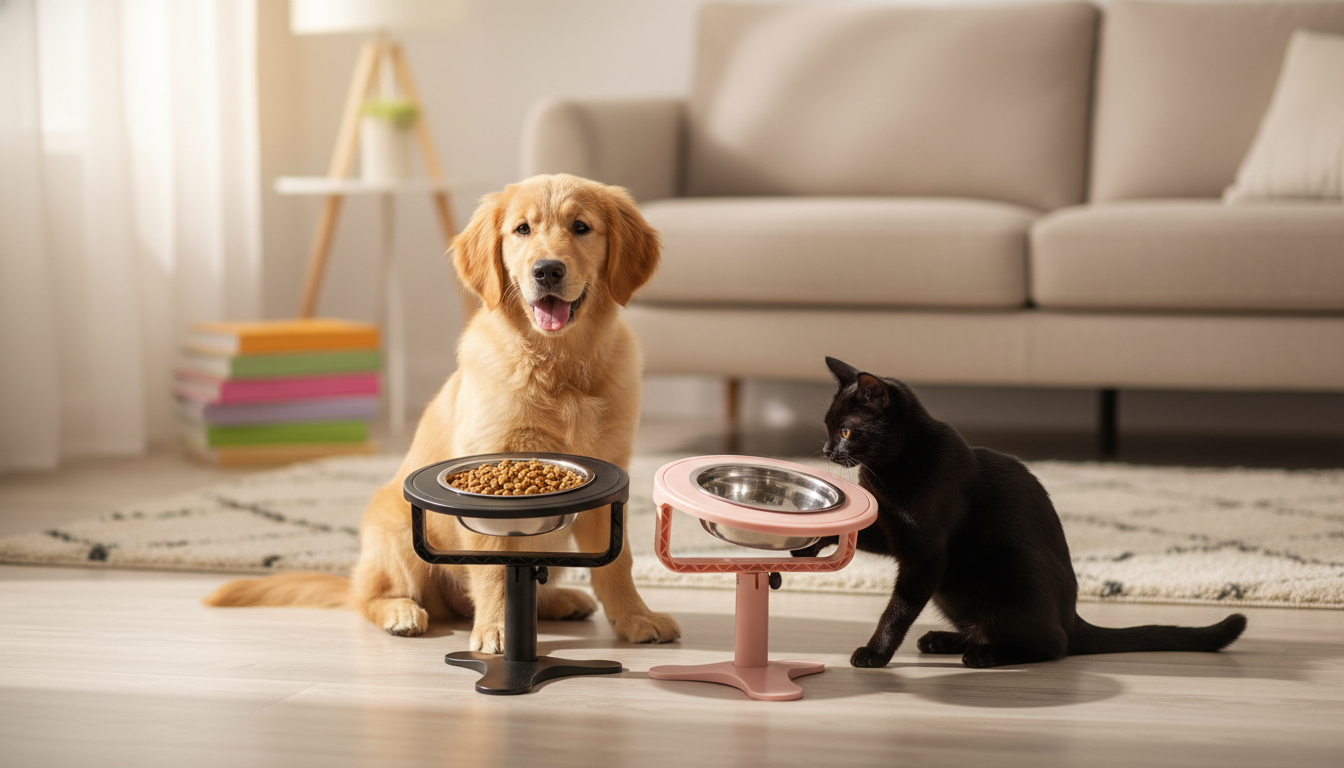
Mealtime can be more comfortable and calmer with a raised, adjustable feeder that also slows fast eaters. This style of bowl helps many pets eat at a steadier pace, reduces neck strain from bending too low, and keeps food and water in one easy-to-clean setup. If you’re managing a gulper, a senior pet with stiffness, or simply trying to keep the feeding area tidier, an elevated slow-feeder station can be a small change that makes day-to-day routines smoother.
Floor-level bowls work fine for many pets, but they aren’t ideal for every body type or life stage. A raised station can reduce how far a pet has to drop the head and neck, which often supports a more natural posture—especially for pets that look hunched over or seem uncomfortable during meals.
For general feeding guidance and portion awareness, it helps to follow established veterinary nutrition recommendations such as those from the American Veterinary Medical Association (AVMA).
Slow feeders are designed with ridges, grooves, or maze-like patterns that make pets work around obstacles. Instead of taking big mouthfuls, many pets end up licking and nibbling, which extends mealtime and encourages more breathing pauses.
If you notice intense frustration (pawing, barking, quitting early) or your pet seems unable to access food comfortably, switch to an easier pattern, spread food more thinly across the surface, or use the slow-feeder side only for certain meals.
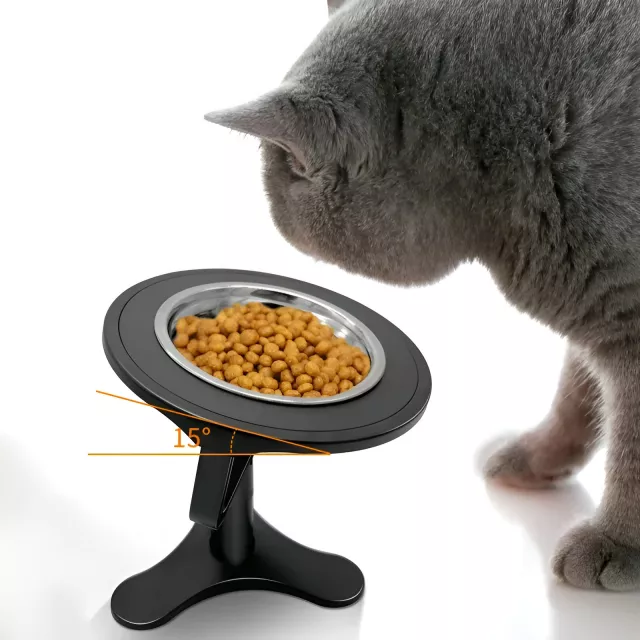
Height is the difference between “elevated and helpful” versus “elevated and awkward.” The goal is simple: your pet should be able to eat without hunching down or stretching up. Look for a neutral neck position and relaxed shoulders after a few bites (not just the first sniff).
| Check | What to look for | Easy adjustment |
|---|---|---|
| Posture | Back is level; neck isn’t craned up or tucked down | Raise or lower by one step and re-check after a few bites |
| Pace | Pet takes smaller bites and pauses to breathe | Use slow-feeder side for meals; switch to smoother bowl for water if needed |
| Stability | Bowl doesn’t wobble or skid during eating | Place on a mat; ensure base sits flat before filling |
| Comfort | No frustration, pawing, or quitting early | Try a softer-texture food, spread meals, or reduce maze difficulty |
A combined food-and-water setup can simplify routines, but it works best when each side is used thoughtfully. Many pets benefit from slowed meals, but water should stay easy to access so hydration isn’t unintentionally reduced.
Cat households may find that small adjustments (like bowl height and a wider eating surface) encourage steadier eating and less mess. For feline-focused feeding considerations, Cornell’s resources can be helpful: Cornell University College of Veterinary Medicine – Feline Health Center.
For background on bloat (GDV) risk factors and why individual guidance matters, see the American Kennel Club (AKC) – Bloat (GDV) in dogs.
Often, yes. The ridges and maze patterns make pets take smaller bites and lick around obstacles, which typically increases meal time; results vary by pet, so supervise the first few meals to be sure your pet stays comfortable and can access the food easily.
Aim for a neutral neck and relaxed shoulders with no hunching or stretching. Adjust in small steps, watch a few bites, and recheck the fit as your pet grows or changes weight.
Yes, as long as water remains easy to drink. Many households keep water in the smoother bowl/section and use the slow-feeder surface for meals, with frequent rinsing and regular washing to prevent residue buildup.








Leave a comment