
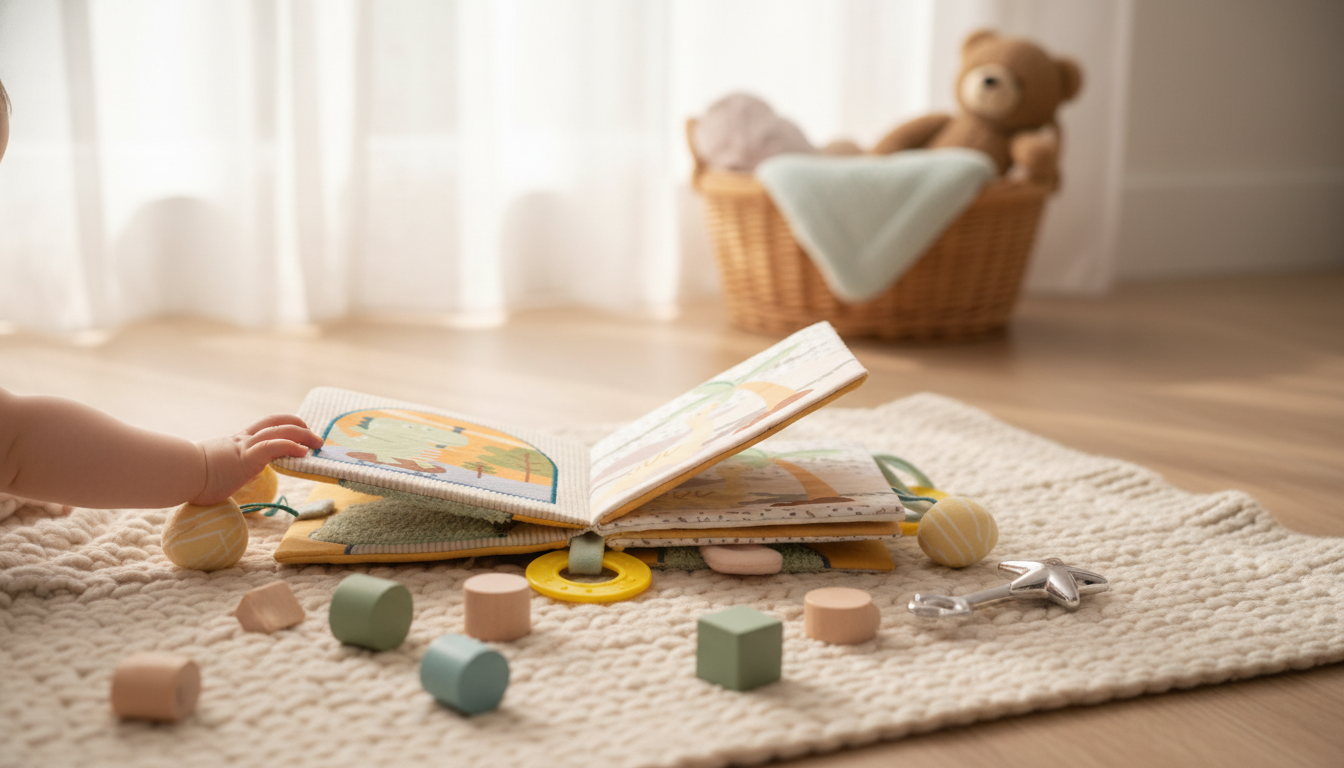
A soft cloth book with built-in sensory elements and a teether can turn everyday moments—tummy time, stroller rides, and bedtime wind-down—into hands-on learning. This type of toy supports early exploration through textures, simple pictures, and safe mouthing, while giving caregivers an easy way to encourage bonding, language exposure, and fine-motor practice. For more guidance, see [PDF] cpsc guidelines for determining age appropriateness of toys.
A cloth book with a teether blends early “book time” with sensory play. Instead of only looking at pictures, babies can touch, squeeze, scrunch, and explore pages that are meant to be handled. The attached teether adds a soothing option during teething phases, helping keep baby engaged with the book while easing gum discomfort. For further reading, see Good Toys for Young Children by Age and Stage – NAEYC.
Because it’s soft, it also reduces worry about bumps compared with hard-board books during wiggly, independent play. Many families like these books for being portable and quiet—easy to toss in a diaper bag, use in a car seat, or bring along for screen-free entertainment. Best of all, it naturally invites caregiver interaction: pointing, naming pictures, and describing textures builds routines that feel like play while supporting early communication.
Babies develop at different speeds, but a sensory cloth book can be adapted to what your child can do right now. For general milestone guidance, the CDC’s infant and toddler milestone checklists are a helpful reference: CDC: Important Milestones.
Short, calm sessions work best. Try high-contrast viewing, tracking a caregiver’s finger as it moves across the page, and a few page “reveals” during tummy time.
Babies start grasping edges, pulling pages, and bringing the teether to their mouth. This is also when different textures can be explored with hands and lips.
Sitting play becomes more common. With help, baby can practice turning pages and responding to simple prompts like “find the animal” or “touch the crinkle.”
More intentional page turning, pointing, early sound imitation, and practicing pincer grasp on small fabric tags (if present) can show up during everyday play.
Toddlers can begin naming objects, following simple directions, and building early book-handling habits (open/close, turn one page at a time). For language-building ideas that fit naturally into play, see: Zero to Three: Early Language and Communication.
If your baby is premature or has different developmental timing, the same activities can be matched to current abilities rather than age.
Not all cloth books are made the same. A few practical details can make a big difference in day-to-day use:
| What to check | Why it matters | What to do at home |
|---|---|---|
| Teether attachment strength | Reduces choking risk and prevents tearing | Tug-test gently; stop use if threads loosen |
| Texture variety | Supports sensory learning and curiosity | Rotate pages/elements to avoid overstimulation |
| Stitching and seams | Withstands chewing and pulling | Inspect weekly; trim loose threads and retire if damaged |
| Cleaning method | Helps manage drool and germs | Follow label; air-dry thoroughly to prevent mildew |
| Size and portability | Fits stroller/diaper bag; easier for small hands | Use a toy strap for travel to reduce drops |
When teething discomfort is a big factor, the AAP’s overview can help set expectations about timing and comfort strategies: American Academy of Pediatrics: Teething.
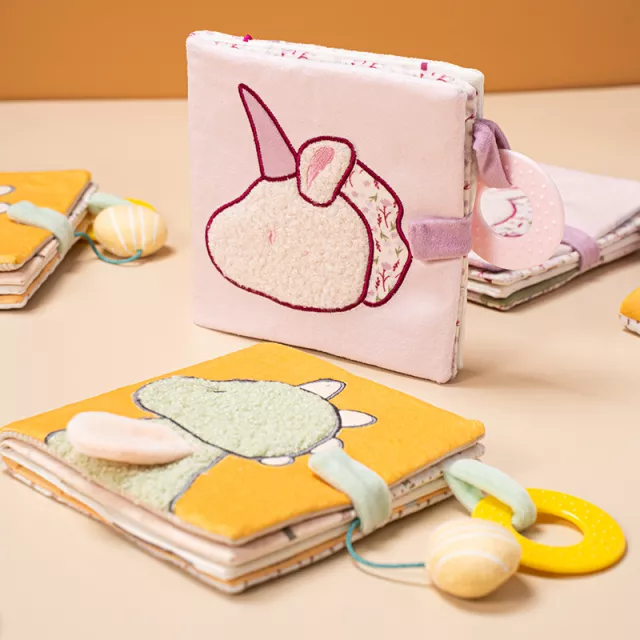
If you’re looking for a baby-friendly option designed to combine page-turning practice with sensory features and a soothing teether, see the Interactive Baby Cloth Book with Teether – Soft Sensory Learning Toy. It’s a convenient choice for travel, tummy time, and everyday play where easy handling and gentle materials matter.
It can be useful from the newborn stage through toddlerhood, with activities matched to your child’s current skills (looking, grasping, turning pages, naming pictures). The teether feature becomes especially helpful once active teething and mouthing increase, often in the later infant months, with supervision.
Follow the care label first, since materials and construction vary. In daily use, wiping it down after outings and letting it air-dry thoroughly helps manage drool and germs; avoid high heat unless the manufacturer specifically says it’s safe.
Check stitching, seams, and the teether attachment for looseness, and watch for fraying or loose threads over time. Supervise chewing and discontinue use if any part looks damaged or starts to detach.










Leave a comment