Cat Body Language & Behavior Cheat Sheet: A Printable Guide to Feline Signals, Postures, and Meows
Cats communicate constantly—just not always in ways humans expect. Learning to read tail position, ear direction, eye shape, posture, and vocalizations can prevent bites and scratches, reduce stress, and build trust. This guide breaks down common feline signals into practical categories and includes a printable cheat sheet for quick reference at home.
How cats communicate: the full “signal stack”
Think of feline communication as a layered “signal stack.” Cats rarely rely on just one cue, and the earliest clues are often silent.
- Body language tends to come before sound: posture, tail, and ears often show the first hints of comfort or discomfort.
- Look for clusters: one sign (like a flicking tail) can mean different things depending on ears, eyes, and context.
- Track the situation: petting, play, feeding time, new visitors, and multi-cat interactions change how signals should be interpreted.
- Respect distance as communication: moving away, hiding, freezing, or blocking access are meaningful choices, not “stubbornness.”
For deeper behavior guidance and cat-friendly handling principles, see resources from International Cat Care and the American Association of Feline Practitioners (AAFP).
Tail signals: from friendly confidence to rising agitation
The tail is one of the easiest parts of the body to spot from across a room—making it a great “early read” during greetings, petting, or tense moments.
- Tail up with a relaxed tip often signals a friendly greeting and comfort in the space.
- Slow, gentle tail movement can indicate interest or focus (watch other cues to decide if it’s play or caution).
- Fast tail flicking or thumping commonly shows irritation or overstimulation—pause petting and give space.
- Puffed tail can appear with fear, high arousal, or defensive aggression; reduce noise and allow an exit route.
- A low or tucked tail often suggests anxiety, uncertainty, or discomfort.
Quick tail decoding (use with ears + posture)
| Tail position/motion |
Common meaning |
Best response |
| Tail upright, relaxed |
Greeting, social confidence |
Speak softly; offer a hand to sniff; let the cat choose contact |
| Tail upright with a hook tip |
Friendly, curious, affiliative |
Reward calm approach; gentle petting if invited |
| Slow swish |
Focused attention, building arousal |
Redirect to toy play; avoid intense petting |
| Fast flick/thump |
Annoyed, overstimulated, conflicted |
Stop handling; give space; reduce stimulation |
| Puffed tail |
Fear/startle/defensive arousal |
Create distance; block escapes less; avoid cornering |
| Tucked/low tail |
Uncertainty or fear |
Offer hiding options; keep environment predictable |
Ears and eyes: the clearest early-warning system
Ears and eyes often shift before a cat escalates from “not sure” to “hands off.” If you only watch two things during handling, make them these.
- Ears forward usually indicate interest and comfort; ears sideways (“airplane ears”) suggest uncertainty or tension.
- Ears pinned back often signal fear or agitation; avoid reaching over the head and give the cat an exit.
- Slow blinking is a friendly, relaxed signal; returning a slow blink can support calm interaction.
- Wide eyes with dilated pupils can mean excitement, fear, or pain—check context and body posture.
- Hard staring can be a challenge between cats; break tension by creating visual barriers and increasing space.
Posture and movement: relaxed, alert, fearful, defensive
Posture shows what a cat is prepared to do next: rest, approach, flee, or defend. The same body parts can look similar in play and fear—movement quality is the giveaway.
- Relaxed cats often show loose muscles, a soft face, and comfortable positions (side-lying, belly partially exposed without tension).
- A crouched, tight body with weight shifted back suggests fear and readiness to flee; avoid forcing contact.
- A cat that freezes is communicating: “stop.” Pausing interaction can prevent escalation.
- Arched back can be play or fear—play is usually bouncy with sideways hops; fear is rigid with puffed fur and retreat cues.
- Blocking, stalking, or silent ambush during conflict can indicate resource tension in multi-cat homes (space, food, litter access, or attention).
Vocalizations: meows, purrs, chirps, yowls, and growls
Cat sounds are meaningful, but they’re most accurate when you pair them with what the body is doing. (A loud meow with soft eyes and tail-up confidence is very different from a loud meow with crouching and pinned ears.)
For additional cat behavior basics (including stress and conflict signals), the ASPCA’s cat behavior overview is a helpful reference.
Petting and play: spotting overstimulation before it turns into a bite
When signals suggest a health problem
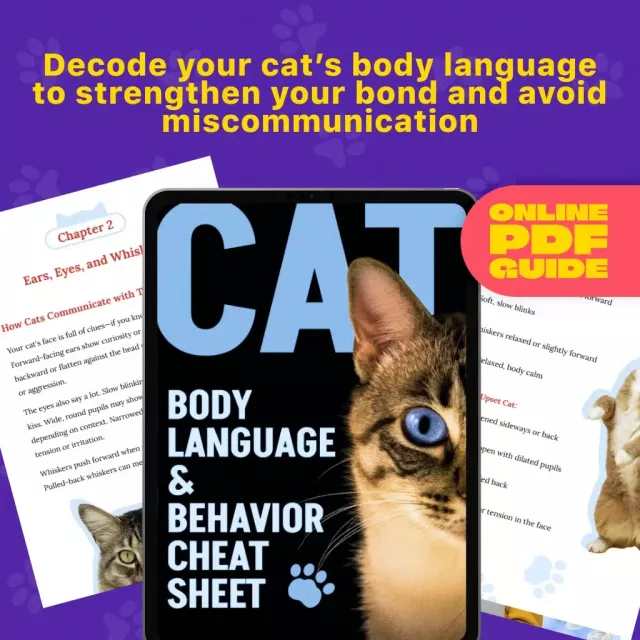
Printable cheat sheet: quick reference for home, sitters, and families
Recommended picks (in stock)
FAQ
What does it mean when a cat’s tail is wagging?
A slow swish often means focused attention and rising arousal, while fast flicking or thumping usually signals irritation or overstimulation. Check ears, eyes, and posture before deciding whether to keep petting, switch to a toy, or give space.
Does purring always mean a cat is happy?
No—purring often shows comfort, but some cats also purr when stressed or in pain. If purring comes with hiding, low appetite, hunched posture, or reduced mobility, a health check is a good idea.
How can a cat’s meows be interpreted more accurately?
Look for patterns by noting when and where the meowing happens and what your cat does right before and after. Pair the sound with body language—greeting meows look different than persistent yowling tied to stress, conflict, or discomfort.
Recommended for you













Leave a comment