
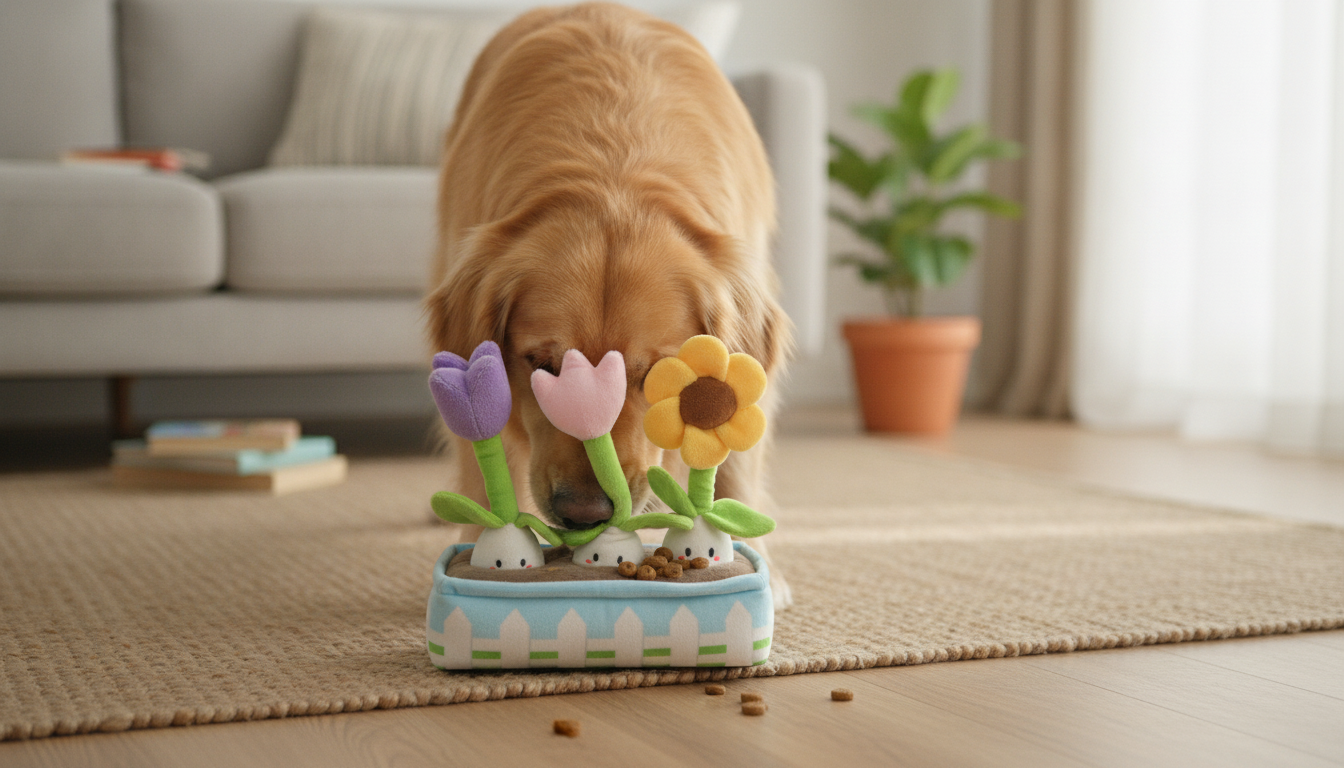
A snuffle-style plush puzzle turns mealtime and treat time into a scent-based game. By hiding kibble or small treats in fabric folds, dogs use their nose and paws to search, helping slow down fast eaters while adding daily mental enrichment. It’s a simple way to transform “eat and done” into a calmer routine that works indoors and fits many training styles. For more guidance, see Everything You Need to Know Snuffle Mats for Dogs.
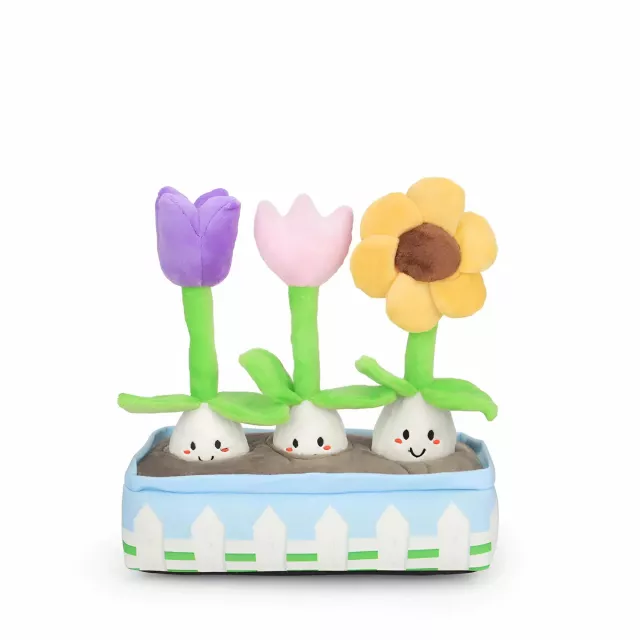
A flower snuffle puzzle is a plush, flower-shaped foraging toy designed to hide food across multiple fabric layers. Instead of dumping dinner into a bowl, you load small pieces into folds and pockets so your dog can “hunt” for them with sniffing, nudging, and gentle pawing. For further reading, see Mental Enrichment Activities We Love – Free Korean Dogs.
Nosework taps into how dogs naturally explore the world. When food is hidden, the brain and body work together—sniff, search, find, repeat—creating a satisfying routine that often feels more “complete” than eating from an open bowl.
For more on scent games as enrichment, see the AKC overview of nose work for dogs. If your dog tends to gulp meals quickly, slower feeding routines can also be part of safer eating habits—especially for dogs at risk of GI upset (learn more via VCA’s guide to bloat (GDV)).
The fastest way to create interest is to make the first few rounds easy and rewarding. Let your dog win quickly, then raise the challenge over time.
Dry, small pieces work best because they drop into folds cleanly and are easy to shake out later. If your dog has a sensitive stomach or is watching calories, use measured kibble instead of adding extra treats.
| Option | Piece size | Difficulty | Notes |
|---|---|---|---|
| Dry kibble | Small/standard kibble | Easy–Medium | Good for slow feeding; measure portions before loading |
| Mini training treats | Pea-sized | Medium | Aromatic options can increase engagement for beginners |
| Freeze-dried bites (crumbled) | Small fragments | Medium–Hard | Can hide deeper; watch for crumbs left behind |
| Large biscuits | Oversized | Easy | Best used as “starter” finds; may not fit well in tight folds |
A snuffle puzzle is an enrichment tool, not a durable chew toy. Most dogs do great with it, but supervision is important—especially for strong chewers or dogs that get frantic around food.
If you’re ready to add a nosework-friendly slow-feeding routine, the Flower Snuffle Puzzle Plush Dog Toy for Nose Training & Slow Feeding is available with fast US shipping and a 100% money back guarantee. Current price: $31.95 (USD); availability: in stock.
| Item | Price | Availability |
|---|---|---|
| Flower Snuffle Puzzle Plush Dog Toy for Nose Training & Slow Feeding | 31.95 USD | In stock |
Most sessions work best in the 5–15 minute range. Start shorter for beginners and end while your dog is still engaged, especially if you’re using part of a meal to manage calories.
It can replace a slow feeder bowl for some meals, as long as you measure the portion and supervise. Some dogs still do better with a bowl for certain diets, and multi-dog homes may prefer bowls to avoid guarding.
It’s designed for sniffing and foraging, not chewing. Heavy chewers should be supervised closely, and the toy should be removed if chewing or tearing starts; inspect it often and stop using it if damaged.






Leave a comment