
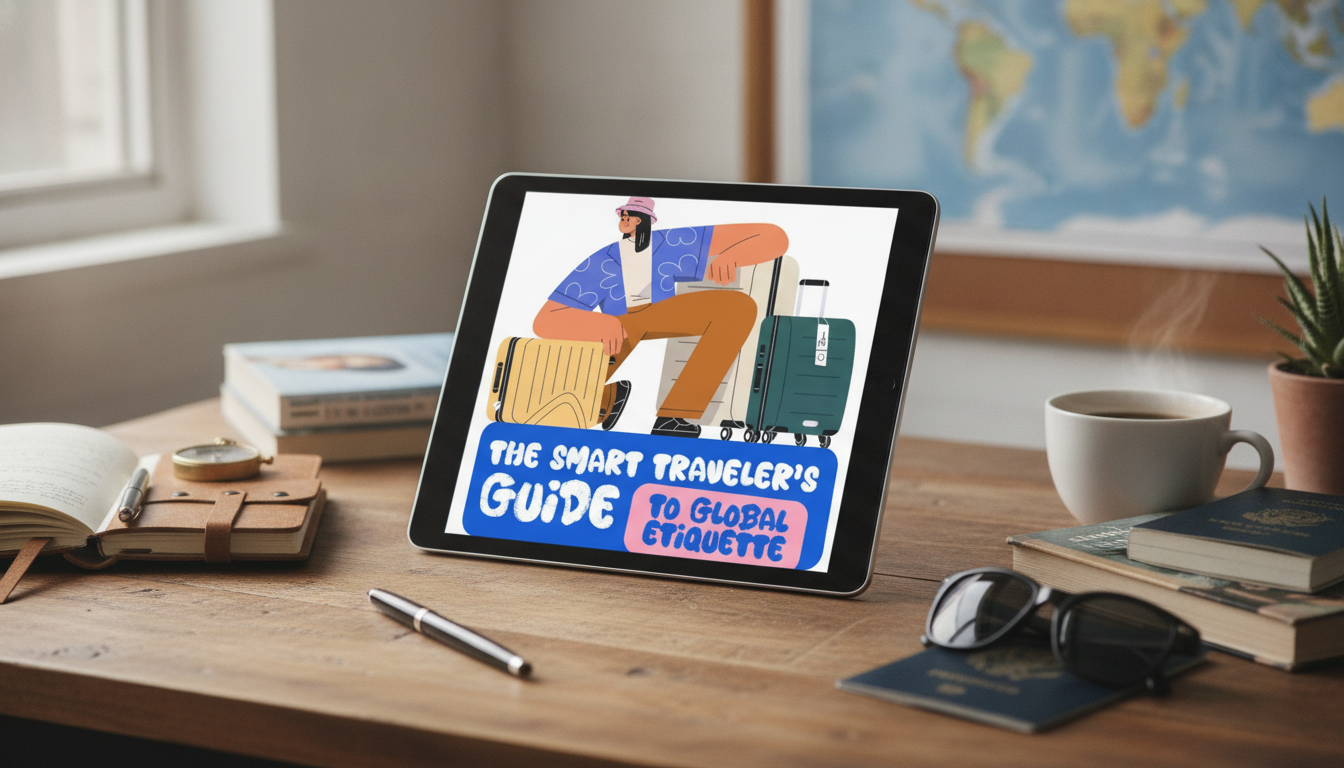
Small etiquette missteps can turn a smooth trip into an awkward one—especially when greetings, personal space, dining rules, and tipping norms change from country to country. A little preparation goes a long way toward feeling confident and showing respect in places where “normal” looks different. If you want practical, situation-based guidance you can pull up anytime, The Smart Traveler’s Guide to Global Etiquette (Digital Download eBook) is designed to help you navigate cultural expectations with clarity—whether you’re traveling for business, study, or leisure.
Etiquette isn’t about being perfect—it’s about being respectful and adaptable. When you meet people where they are culturally, everyday interactions become smoother and more welcoming.
Many travel resources focus on big-picture culture. This kind of guide focuses on what you’ll actually do: meet people, eat meals, move through public spaces, and show courtesy in unfamiliar environments.
To keep travel planning streamlined, many travelers pair etiquette prep with practical tools—like a dependable watch for day-to-day schedules across time zones. A travel-friendly option to consider is the Rugged AMOLED Smartwatch with 3D Curved Display & Bluetooth Calling, especially if you’re hopping between tours, meetings, and reservations.
When time is short, treat etiquette like a pre-flight checklist. Prioritize what you’re most likely to do in the first 48 hours: checking in, meeting someone, eating out, visiting key sites, and navigating transit. If you’re unsure, default to conservative choices—polite distance, a modest tone, and observing what locals do first.
It also helps to pair etiquette with basic planning: local holidays, prayer times, and dress expectations can shift business hours and social norms quickly.
| Situation | Do | Avoid |
|---|---|---|
| Greetings and introductions | Follow the local lead on handshakes, bows, cheek kisses, and titles | Overly familiar first-name use or touching before rapport is established |
| Dining out | Learn basic table signals, shared-plate norms, and who pays | Assuming tipping, seating, or utensil rules match home |
| Religious sites | Dress modestly, lower volume, and check photo rules | Entering without required coverings or photographing restricted areas |
| Public behavior | Respect personal space, queueing, and local noise levels | Pointing, loud calls across rooms, or casual gestures that may be offensive |
| Business meetings | Confirm punctuality expectations and preferred forms of address | Rushing to first names, direct refusals, or overly casual dress |
| Transportation and markets | Ask before negotiating; keep interactions calm and friendly | Aggressive bargaining, impatience, or public frustration |
Most etiquette problems come from assumptions. A few small adjustments can prevent the most common “oops” moments.
If you’ll be working while traveling, a compact setup can help you stay polite and efficient (especially when responding quickly across time zones). For travelers who game or work on the go, the One-Handed RGB Backlit Mini Mechanical Gaming Keyboard can be a handy add-on for a laptop bag—without turning cafés or shared spaces into a noisy distraction if used considerately.
Digital downloads fit modern travel: minimal packing, fast access, and easy refreshers right before key moments. If you purchase The Smart Traveler’s Guide to Global Etiquette (Digital Download eBook), consider saving an offline copy for areas with limited connectivity and bookmarking the sections you’ll use most (greetings, dining, business settings, and religious sites).
For broader travel readiness, it’s also smart to consult official guidance for safety and health updates before departure, including the U.S. Department of State country information and the CDC Travelers’ Health resources.
Yes. It covers everyday scenarios like greetings, dining, and public behavior, while also addressing professional contexts such as meetings, hosting, and appropriate levels of formality.
Digital downloads are typically available immediately or shortly after checkout via a download link or account access. Saving an offline copy helps when you’re traveling with limited internet access.
Regional differences are common. Use respectful defaults (observe first, keep a modest tone, follow venue guidance), and adjust based on what locals do in that specific city or setting.











Leave a comment