
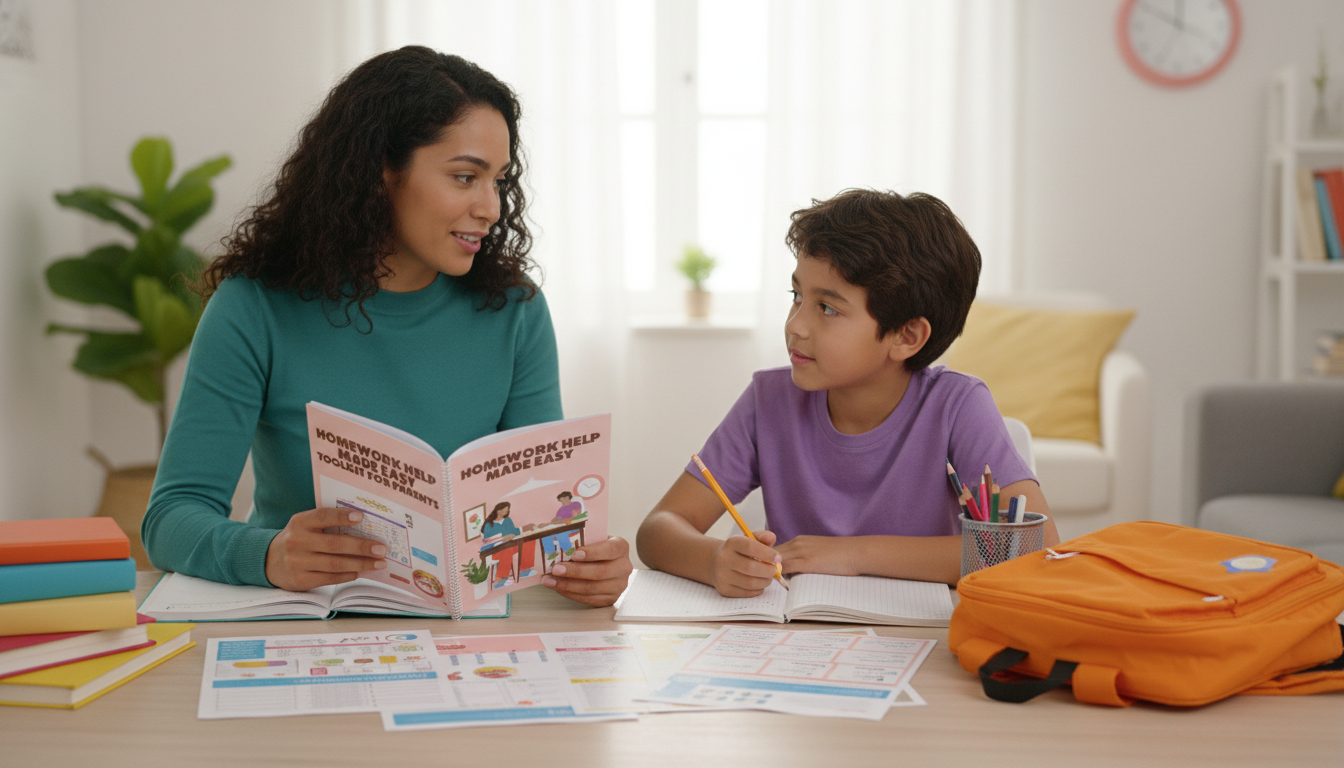
Homework can turn into nightly stress when routines are unclear, expectations shift, or kids don’t yet have the skills to plan and persist on their own. A simple, repeatable system—built around time, space, and support—helps children finish work with less conflict while gradually taking more ownership. This guide breaks down a practical parent-friendly approach and shows how a printable toolkit can make the routine consistent from day to day.
When homework improves, it’s rarely because a child suddenly “tries harder.” More often, the process becomes predictable—so your child can use energy for learning instead of negotiating what to do next.
These skills fall under “executive function,” which includes organizing, initiating tasks, and self-monitoring (see the APA definition of executive function).
The best homework routine is the one you can repeat on ordinary weekdays. Keep it simple enough that it works even when someone is tired, hungry, or short on time.
| Step | Parent Role | Child Role | Printable to Use |
|---|---|---|---|
| Before starting | Confirm time/place; check materials are ready | Gather supplies; open planner/portal | Materials checklist + daily start card |
| During work | Prompt strategy; keep help brief; reduce distractions | Work in short sprints; ask specific questions | Focus timer + help request script |
| After finishing | Review for completeness (not redoing); praise effort/process | Self-check; turn in; pack up | Turn-in tracker + self-check list |
| Weekly reset | Look for patterns; adjust schedule; communicate with teacher if needed | Reflect on what worked; set a small goal | Weekly habit tracker + reflection page |
For more parent-facing guidance on supporting homework without taking over, the U.S. Department of Education’s resource on helping your child with homework is a helpful reference point.
Independence grows when kids do the thinking, even if it takes longer at first. The goal is “support the process,” not “fix the answer.”
If your child gets stuck, keep your “help” short: restate directions, model one example only if needed, then hand it back for them to finish. That single handoff is where confidence builds.
Motivation issues often signal a barrier—not a character flaw. Responding calmly keeps the routine intact and prevents homework from turning into a nightly power struggle.
The American Academy of Pediatrics also emphasizes keeping homework reasonable and developmentally appropriate; see their guidance on homework for additional context.
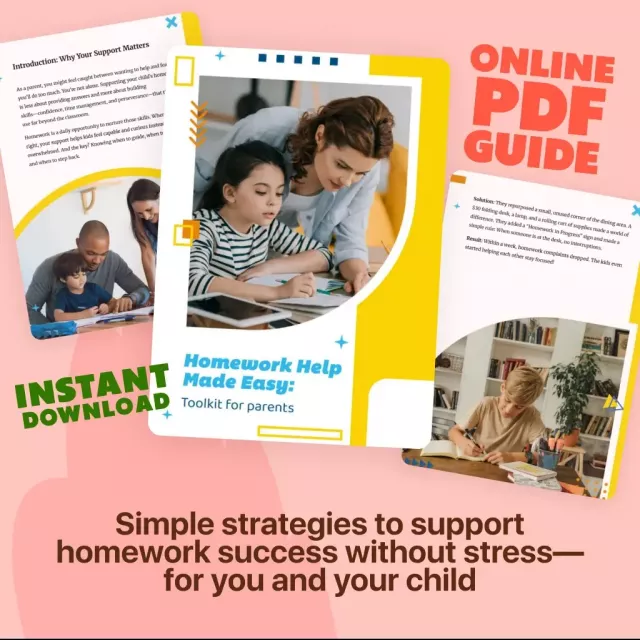
If you want a ready-to-use set designed to support independence (without adding extra prep for parents), consider the Homework Help Made Easy Toolkit for Parents – Printable Guide for Creating Study Habits, Homework Strategies & Independent Learning. For families building multiple home routines, these related printables can also support smoother days: the Toddler Nap Transition Guide – Printable Parenting Checklist for When Should Toddler Drop Afternoon Nap and Bye-Bye Bottle! Toddler Bottle-Weaning Checklist | Digital Download Guide for Parents.
Give enough help to clarify directions and model a strategy, but keep the thinking and writing with your child. Use brief check-ins and require a specific question before stepping in so “help” doesn’t turn into doing it for them.
Track time and sticking points for 1–2 weeks, then use shorter work sprints with planned breaks and clearer task chunks. If it’s still consistently excessive, share your notes with the teacher to clarify expectations and identify missing skills or misunderstandings.
Use the same start cue daily, add a visual checklist, and set a consistent turn-in spot so steps don’t rely on memory. Fade support gradually—from frequent prompts to scheduled check-ins to self-tracking—once your child shows consistency.










Leave a comment