

Dating can be exciting and confusing at the same time—especially when chemistry shows up before clarity. A simple, repeatable check-in can help keep decisions grounded in emotional safety and personal boundaries. This guide offers a practical way to notice red flags early, separate nervousness from danger signals, and use a printable checklist to stay consistent from first message to early relationship conversations.
Emotional safety isn’t about never feeling nervous. It’s about feeling respected, listened to, and free to say “no” without punishment, pressure, or guilt. In the earliest stages, it often shows up in small moments: how someone responds when you disagree, how they handle disappointment, and whether your boundaries are treated as real.
The goal isn’t to “diagnose” someone from one awkward comment. The goal is to notice patterns—especially patterns that escalate or show up the moment you introduce a boundary.
| Situation | Green-flag response | Red-flag response |
|---|---|---|
| You say you’re busy tonight | Respects it and suggests another time | Guilt-trips, pressures, or becomes cold |
| You clarify a boundary | Asks questions and adjusts | Argues, mocks, or “tests” the boundary |
| They make a mistake | Apologizes clearly and changes behavior | Deflects, blames you, or minimizes |
| You want to slow the pace | Matches your pace without punishment | Love-bombs, rushes commitment, or threatens to leave |
| You disagree | Stays respectful and curious | Escalates, insults, stonewalls, or intimidates |
A checklist works best as a brief grounding tool after interactions—so you’re not trying to “score” someone in the moment. The structure keeps you focused on observable behavior instead of spinning into self-doubt or making excuses for what didn’t feel right.
Some early warning signs are subtle until you see them grouped together. These themes matter because they often predict how someone handles power, conflict, and accountability over time.
If you recognize coercion, intimidation, or escalating threats, consider reviewing warning sign resources like the National Domestic Violence Hotline (https://www.thehotline.org/identify-abuse/warning-signs-of-abuse/) or RAINN (https://rainn.org/articles/warning-signs-abuse).
Clear, calm language is often enough with emotionally safe people. With unsafe people, you may notice they negotiate, punish, or provoke. Either way, short scripts help you stay steady.
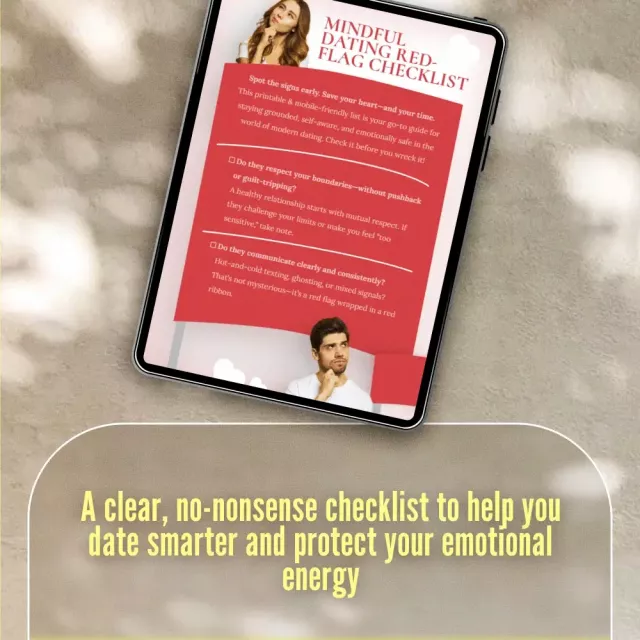
If you want a ready-to-use option, try the Mindful Dating Red-Flag Checklist (printable) for a simple post-date reflection format focused on emotional safety, consent, communication, and boundary respect.
Severity and pattern matter more than a specific number. Coercion, threats, intimidation, or repeated boundary violations are immediate deal-breakers; if you’re unsure, pausing and getting support can help you see the situation clearly.
Real change shows up as consistent behavior over time, specific accountability without blaming you, and respectful boundaries without resentment. Track actions across multiple situations before increasing trust or commitment.
Used briefly after dates, a checklist is more like a grounding routine than a rulebook. It can reduce overthinking by focusing on observable behavior and your own values instead of replaying conversations all week.











Leave a comment