
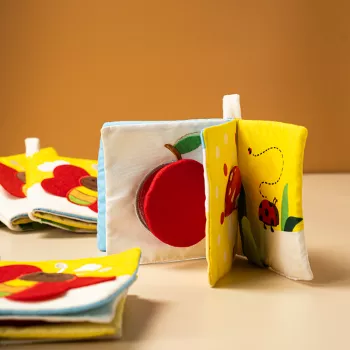
A soft cloth animal book turns everyday play into gentle practice for early skills—touch exploration, page turning, first words, and focused attention. With bright animal scenes and baby-safe fabric construction, this kind of toy fits naturally into Montessori-style routines: simple, hands-on, and easy for little hands to manage at home, on the go, or during tummy time. For more guidance, see Doing Montessori at Home with Your Baby (7 to 9 months).
Because babies learn through movement and repetition, a cloth book can become a familiar “go-to” item: open, look, touch, close—then do it again tomorrow. Over time, those tiny moments add up to meaningful progress in coordination, communication, and calm engagement.
A great soft baby book is more than cute pages—it’s a tool that supports development in small, realistic steps. Look for a design that makes it easy for your baby to participate actively rather than just watch.
| Activity | What Baby Does | Skill Practiced | Simple Caregiver Prompt |
|---|---|---|---|
| Tummy-time reading | Looks, reaches, presses pages | Neck/shoulder strength, visual tracking | “Can you find the animal?” |
| Page turning | Grabs a corner and flips | Fine-motor control, problem-solving | “Turn the page slowly.” |
| Texture exploration | Rub, squeeze, tap | Sensory processing, cause-and-effect | “Soft… rough… tap tap.” |
| Picture naming | Watches mouth, vocalizes | Early language, sound imitation | “Cat says meow.” |
| On-the-go quiet play | Holds and revisits pages | Self-regulation, sustained attention | “Let’s look at one page together.” |
Montessori-style play works best when it matches your baby’s current abilities. The goal isn’t to “get through” the book—it’s to let your child do as much as possible, with calm support.
For more ideas on building language and connection through simple reading routines, the American Academy of Pediatrics offers practical guidance on reading and talking with your child.
Soft doesn’t automatically mean worry-free. A quick safety check—especially after washing—helps keep playtime comfortable and secure.
If you’re looking for a simple, budget-friendly soft book that fits into Montessori-aligned routines, the Montessori Cloth Animal Baby Book – Soft Early Learning Toy for Infants is designed for baby hands, early sensory exploration, and first-word play.
| Item | Detail |
|---|---|
| Name | Montessori Cloth Animal Baby Book – Soft Early Learning Toy for Infants |
| Price | $12.95 |
| Availability | In stock |
| Category | Kids & Babies |
For families with older babies and toddlers, pairing early reading routines with practical transitions can also help daily flow. The Bye-Bye Bottle! Toddler Bottle-Weaning Checklist (Digital Download) is a helpful add-on when you’re ready for the next stage.
Cloth baby books can be used from the newborn stage through toddlerhood. Early on, babies benefit from looking and tracking; later, they practice grabbing, turning pages, naming animals, and enjoying simple one-sentence stories.
Follow the manufacturer’s care instructions when available. In general, gentle hand-washing or a delicate cycle with mild detergent works well, then fully dry the book and re-check seams and edges before returning it to play.
They’re typically made with baby-friendly materials, but chewing should still be supervised. Regularly inspect stitching and any crinkle or insert components, and stop using the book if you notice loose parts, tears, or damage.
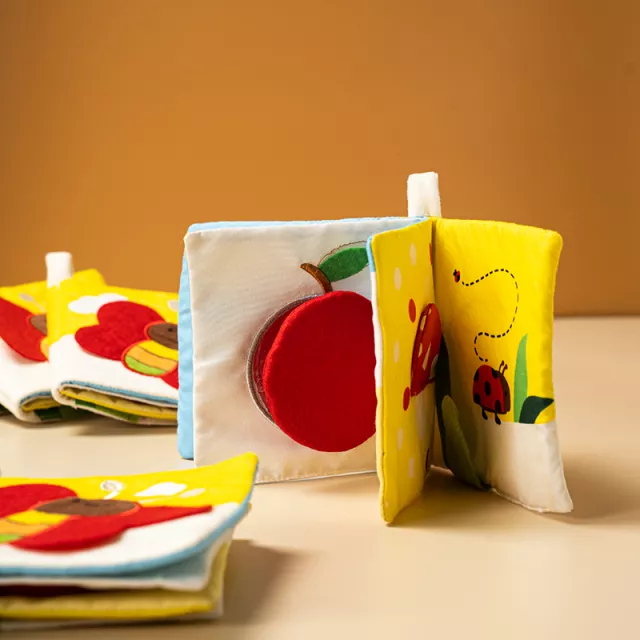










Leave a comment