
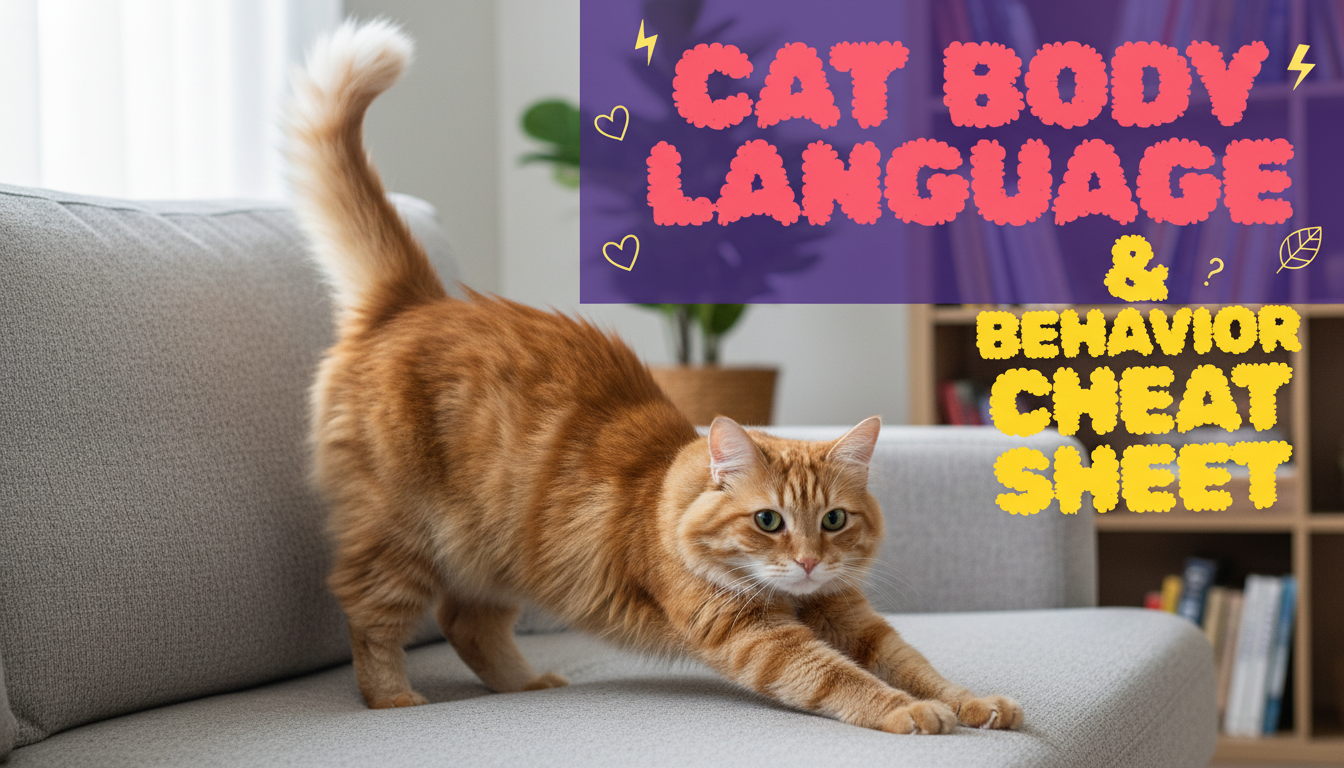
Playful and overstimulated cats can look similar at first—both may be active, vocal, or swatty—but their body language tells two very different stories. A playful cat generally looks loose and curious, while an overstimulated cat looks tense and “wired,” often escalating from warning signals to a quick bite or scratch.
Look at overall body tension first. Play is usually bouncy and fluid: a relaxed spine, quick hops, and a cat that pauses to re-engage. Overstimulation tends to show as stiffness: the cat freezes, posture tightens, and movements become sharp or abrupt rather than springy.
Check the tail. In play, you may see a tail held up like a friendly flag, gentle swishing, or a playful twitch at the tip during a pounce. With overstimulation, tail signals get more intense: fast lashing side-to-side, thumping, or a rigid tail that looks “locked in.” A rapidly whipping tail is one of the clearest “too much” signs.
Read the ears and eyes. Playful cats often have forward or slightly sideways ears and bright, curious eyes. Overstimulated cats frequently show ears rotated back or flattened (“airplane ears”), dilated pupils that don’t relax, and a hard stare. If the face looks tight—especially around the eyes—assume the cat is nearing its limit.
Watch the skin and whiskers. Overstimulation can cause rippling skin along the back, twitchy shoulders, and whiskers pinned forward or tight against the face. In play, whiskers are more neutral, and the coat and back don’t “shiver” with tension.
Notice what happens when you stop. A playful cat will often re-initiate with a playful crouch or bring a toy back. An overstimulated cat may abruptly walk off, whip around, hide, or deliver a sudden “last straw” swat if touched again.
For a quick visual reference to tail, ear, eye, and vocal cues, see the full guide here: cat body language cheat sheet.
Fast tail lashing, ears turning back, skin twitching, sudden head turns toward your hand, and a stiffening body are common “stop” signals. Pause immediately and give your cat space before trying again.











Leave a comment