
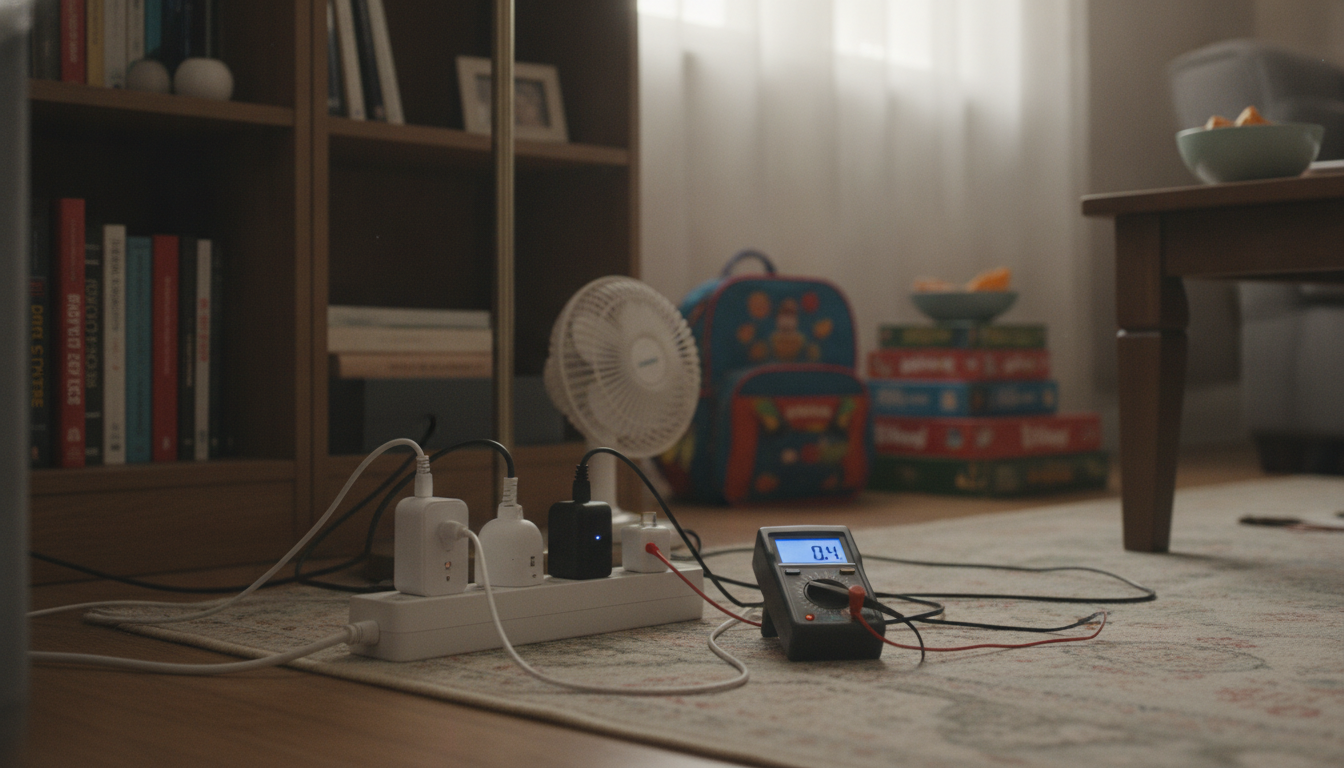
Even when a smart plug is switched “off” in the app, it usually still uses a small amount of electricity. That’s because the plug needs standby power to keep its Wi‑Fi (or Zigbee/Z-Wave) radio listening, run its tiny processor, and stay ready to receive a command. For most models, this idle draw is typically around 0.5 to 2 watts, though some can be a bit lower or higher depending on the hardware and connection type.
Watts are small, but they run 24/7. As a quick estimate, a smart plug drawing 1 watt continuously uses about 0.024 kWh per day, roughly 0.72 kWh per month, and about 8.76 kWh per year. Multiply that by your electricity rate to get the cost. At $0.15/kWh, that’s around $1.30 per year per plug. With multiple plugs, the total becomes more noticeable, especially if you have a whole-home setup.
A smart plug can cut power to the connected device, but the plug itself remains powered unless it’s unplugged or switched off by a physical master switch. This is still a net win when it eliminates larger “vampire” loads from electronics like TVs, game consoles, speakers, coffee makers with clocks, or chargers that stay warm even when nothing is charging.
Look for energy-monitoring smart plugs that publish low standby consumption, consider non-Wi‑Fi options if your system supports them, and avoid putting smart plugs where the controlled device already draws almost nothing at idle. For a practical checklist on cutting standby power at home, visit this smart plug guide.
Usually, yes—if the plug is controlling devices with meaningful standby draw. A smart plug’s 0.5–2 watts is often far less than what many electronics consume while “off,” so the net effect can still be savings.











Leave a comment